Saturday, February 16, 2008

Censorship under the PAP : 1959 - 2008

Below is a summary of a list compiled here by Ng Yi-Sheng. As Ng himself noted, it is by no means exhaustive, as many cases of censorship in Singapore often get swept under the rug as artists fear more repercussions (such as withdrawal of State funding) should they blow the whistle.

See also : A Chronology of Authoritarian Rule in Singapore.

  • 2008: The Complaints Choir Project is invited to Singapore as part of the M1 Fringe Festival. The MDA passes the text of the songs without cuts. However, police inform the organisers a few days before the show that no foreigners will be allowed to perform.

  • 2007: At the Singapore Design Festival's 20/20 exhibition at the National Library, Brian Gothong Tan's video installation is pulled on opening night. Tan had included a mockup trailer, which includes a shots of a girl playing a Singapore Airlines stewardess smoking cigarettes and snorting cocaine.

  • 2007: The MDA's Board of Film Censors announces that it will ban the soon-to-be-released Xbox video game Mass Effect II due to the presence of a scene of lesbian intimacy. Amidst media coverage, the decision is reversed, but reports note that two other video games have been banned earlier in the year: "God of War II" for nudity and "The Darkness" for excessive violence and religiously offensive expletives.

  • 2007: Two minutes of material are cut from Ekachai Uekrongtham's Pleasure Factory, a feature film set in Singapore's red-light district of Geylang.

  • 2007: The National Arts Council drops an essay by Jason Wee from the catalogue of Raised, an exhibition on foreign workers, featured as part of the biannual Singapore Art Show. The essay made reference to Operation Spectrum. NAC says the article "was inappropriate in the context of the project theme and the rest of the catalogue contents". To date, the article has not been published. See here and here.

  • 2007: The MDA bans Cut Sleeve Boys, a London film on gay British-Chinese men, starring Singapore-born actor Steven Lim. See here.

  • 2007: At the IndigNation Pride Festival, ten items are banned by the MDA and police authorities, including Alex Au's "Kissing", a photographic series of same-sex couples kissing; "In the Pink", a picnic at Botanical Gardens (banned by National Parks Board); and a talk by law professor Dr Douglas Sanders on homosexuality and Asian law.

  • 2007: The MDA officially bans Martyn See's Said Zahari's 17 Years, a short documentary on the imprisonment of Said Zahari, a former editor of the newspaper Utusan Melayu and long-term political detainee of Singapore.

  • 2007: The MDA bans Solos from the Singapore Film Festival. Directed by Kan Lume and Loo Zihan. The Board of Film Censors takes issue with the “prolonged and explicit homosexual lovemaking scenes including scenes of oral sex and threesome sex”.

  • 2007: SooBin Art Gallery opens a month-long exhibition showcasing the oil paintings of female Beijing artist Chen Xi. The centrepiece was to have been Fly Onto Clouds, a 4-metre high image of a nude woman covered with soapsuds, but the painting is deemed too sexually provocative by MDA, which bars the gallery from displaying the work in full public view at the gallery’s location at the ground-floor atrium of the MICA Building.

  • 2007: The MDA bans the DVD of Madonna's The Confessions Tour: Live from London, as it features the singer performing the ballad Live To Tell while suspended from a giant mirrored cross, on grounds that it is religiously insulting to Christians.
  • 2006: The MDA bans SuperStar, a book of Asian celebrity photographs by internationally-acclaimed Singapore-born photographer Leslie Kee. The rationale given is that the book features full frontal male nudity, revealing genitals and pubic hair. For more information, click here and here.

  • 2006: MDA imposes a fine of $10,000 on Singapore's only cable television operator, Starhub Cable Vision (SCV), for airing scenes of lesbian sex and bondage in the American reality TV show Cheater. SCV representatives communicated that they were disappointed with MDA's decision, and noted that no problems had arisen when the episode was aired in China, India and Indonesia.

  • 2006: The Far Eastern Economic Review publishes a sympathetic interview with opposition party leader Chee Soon Juan. MM Lee Kuan Yew and PM Lee Hsien Loong sue FEER for defamation, claiming the Review had alleged they were corrupt. For more information, click here.

  • 2006: The IMF and World Bank Meetings are held in Singapore. Due to local law, for the first time in the history of the meetings, outdoor demonstrations are banned. Indoor demonstrations are only allowed within an area in Suntec City spanning 14m by 8m. 27 accredited protesters are denied entry to Singapore and are forced to leave the country as police claim they have been involved in violent demonstrations; when WB/IMF officials object, 22 of these 27 are eventually permitted to enter the country.

  • 2006: At the time of the IMF meetings, three local activists, including the 20 year-old guitarist Seelan Palay, are detained for two days and have their computers seized for planning to distribute anti-globalisation flyers. They are investigated under the Printing and Processing Materials Act, which states that those in posession of materials that contain "any incitement to violence or counselling disobedience to the law" could be jailed up to 3 years, fined, or both. Police also confiscate flyers from opposition politician Chee Soon Juan and his sister Chee Siok Chin, who were distributing them to advertise an Empower Singaporeans Rally and March.


  • 2006: Political podcasting and videocasting is banned during the election period. All bloggers who desire to "persistently propagate, promote or circulate political issues relating to Singapore" are required to register with the MDA. Nonetheless, the Internet becomes a strong force for political discussion during this period, and no penalties are suffered when the "Persistently non-political podcast" of the mrbrown show satirises the PAP's treatment of opposition candidate James Gomez.

  • 2006: Smegma, an English-language play by Agni Kootthu (Theatre of Fire) is denied performance in a strange sequence of events. Despite the issuance of the licence on 1 August, the licence is suddenly annulled the MDA on 5 August, the day of performance.

  • 2006: On 30 June, blogger mrbrown writes an article, titled "S'poreans are fed, up with progress!", for his weekly opinion column in Today newspaper concerning the rising costs of living in Singapore. An official from MICA publishes a response letter on the same newspaper calling mrbrown a "partisan player" whose views "distort the truth". On July 6, the newspaper suspends mrbrown's column. To express protest, 30 people gather in Raffles City wearing brown in a "flashmob" demonstration orchestrated via SMS. Although this is in contravention of the Unlawful Assemblies Act, no-one is charged.

  • 2006: Filmmakers Colin Goh and Woo Yen Yen are forced to remove trailers of Singapore Dreaming from television due to their heavy use of Singlish. The Board of Censors also requires the filmmakers to dub over all Hokkien vulgarities from the film. An interview here.

  • 2006: At the annual IndigNation festival on gay, lesbian, bisexual and transgender issues, two artworks are censored by the MDA. Poet Koh Jee Leong is prevented from reading aloud a poem entitled "Come On, Straight Boy", on the grounds that it encourages gay sex. MDA places an R(A) rating on the exhibition Shitlosophy: Everybody Shits and removes four photographs. For more information, click here.

  • 2005: Singaporean director Martyn See is forced to remove his debut documentary film Singapore Rebel from the 2005 Singapore International Film Festival due to his violation of the Films Act section pertaining o political films. See withdraws the film because he faces a $100,000 fine and a two-year jail sentence imposed by the Singapore Board of Censors.

  • 2005: MDA withholds the license for the play Human Lefts by the Fun Stage until the group rewrites portions of their script; specifically, references to the death penalty. The play was originally written about the hanging of Shanmugam Murugesu and was to have been staged one day after the controversial execution of Australian national Nguyen Tuong Van.

  • 2005: Hung at Dawn, a Substation concert in commemoration of former national athlete Shanmugam 'Sam' Murugesu, who was executed for marijuana dealing on Friday May 13. Police ban the use of Sam's face on publicity materials, as this would be tantamount to "glorifying" an "ex-convict" and "executed person". From here.

  • 2005: Chen Jianhao, a graduate student at the University of Illinois at Urbana-Champaign, is made to apologise and shut down his blog containing criticisms on government agency A*STAR, after its Chairman Philip Yeo threatens to sue for defamation. Also, three bloggers are arrested and charged under the Sedition Act for posting racist comments on the Internet; two are sentenced to imprisonment.

  • 2005: The gay website www.fluffboy.com is banned in October. Another gay website, sgboy.com, is fined $5,000 by the MDA and forced to remove "offensive" content. Click here for more information.

  • 2004: The Economist magazine pays US$230,000 in damages to PM Lee Hsien Loong and his father MM Lee Kuan Yew, and apologises "unreservedly" for an August article that noted "a whiff of nepotism" in the appointment of Lee's wife, Ho Ching, as chief executive of a government investment company.

  • 2004: A new series of anti-gay initiatives ultimately culminates in the banning of the "Snowball" and "Nation" gay parties. Manazine, a gay-oriented magazine, is told to "tone down" its "overtly homosexual content" and subsequently ceases production. A forum called "The Lovers' Lecture Series" is denied a license. The gay Taiwanese movie Formula 17 is banned.

  • 2003: Royston Tan's short film 15, on teenage gangsters in Singapore, suffers from 27 cuts from the Board of Censors. Among the objections raised are that scenes depict gangsterism, truancy, self-mutilation, delinquency, Hokkien rap and the Esplanade. The film is eventually released with an R(A) rating.

  • 2003 : Following a report in Today newspaper on the trauma of SM Lee Kuan Yew in London after his wife had suffered a stroke, an advisor to Mr Lee reprimands Today editor Mano Sabnani for allowing the report to be published. The young journalist who wrote the story, Val Chua, reportedly has her press card suspended. From here.
  • 2003 : The police reject three applications by a White Ribbon Campaign group to stage outdoor events to mark the International Day Against Violence Against Women. Police first deny the group a permit for a march - and later turn down its application to hold a children's drama presentation - because such events may threaten "law and order." The group then apply to hold an outdoor children's choir performance, but that is also rejected. From here.

  • 2002: Causeway, a Malay language play by Teater Ekamatra is censored by NAC, which expresses concern over a scene where a Malaysian character has the final say on a debate with a Singaporean character over the tudung issue.

  • A documentary on opposition politician J. B. Jeyaretnam, called A Vision of Persistence, is withdrawn from Singapore International Film Festival. Lecturers and students from Ngee Ann Polytechnic, who made the video, are warned that the Political Videos Act could be used against them.

  • 2002: Escape from Paradise, a bestselling book by John and May Chu Harding, is withdrawn from bookstores and libraries. Enquiries reveal that the book was removed due to threats of legal action by Helen Yeo, a Singapore lawyer and wife of former Cabinet Minister Yeo Cheow Tong, as her firm had been mentioned in conjunction with an illegal house sale. Click here for more information.
  • 2002 : UnionWorks' Mandarin radio station is fined $15,000 for adding "injections of personal remarks and observations by the newsreader, which were unwarranted in normal news bulletins," said the Singapore Broadcasting Authority (SBA). From here.

  • 2002: The zany Hollywood comedy Zoolander is banned in both Singapore and Malaysia for its fictional depiction of Malaysia as impoverished and dependent on sweatshops. The ban is lifted in 2006.

  • 2001: Sintercom, a non-partisan Internet website set up by Tan Chong Kee, closes in response to the Singapore Broadcasting Authority demanding that the site be gazetted as a political website that "engages in the propagation, promotion and discussion of political issues relating to Singapore." Sintercom had been one of the first websites where Singaporeans could exchange political opinions.

  • 2001 : Police arrest internet critic Robert Ho Chong at his home after being charged with an offence punishable by up to three years in jail. The 51-year-old former journalist posted articles before the general elections urging opposition candidates to enter polling stations, as did the PAP leaders in the 1997 elections. The police classified Ho's article as an attempt to incite violence or disobedience to the law that was likely to lead to a breach of peace. From here.

  • 2000: Agni Koothu's English-language run of playwright/director Elangovan's play Talaq is banned for its depiction of marital violence in the Indian-Muslim community. The Public Entertainment Licensing Unit (PELU) has no objections to manager S. Thenmoli seeking to document the rehearsal at the Drama Centre, where she had made a paid booking. However, on her arrival, the then Executive Director of NAC calls the police in for alleged trespassing, resulting in a four-hour standoff ending in S. Thenmoli's arrest.

  • 2000: National Arts Council pulls out funding for a production of Drama Box's Mandarin play Vaginalogue, protesting against the use of the image of a vagina in the play.

  • 2000: Speaker’s Corner opens at Hong Lim Park. The Straits Times reports that "the Speakers' Corner at Hong Lim Park is a place where Singapore citizens can speak freely in public without having to apply for a Public Entertainment License", although speakers must apply for a permit at the nearby police post first and are forbidden from discussing racially or religiously seditious issues. A year later, James Gomez, commemorating the Corner’s first year anniversary, says, "The only thing which has grown at Speaker's Corner is the grass."

  • 2000 : A Radio Corporation Singapore (RCS) radio report on a Human Rights Day event at Speakers Corner was re-edited after the first report went on air containing comments by JB Jeyaretnam and a letter by Kofi Annan. Shortly after, a spokesperson for RCS said that the journalist Fauziah Ibrahim had "resigned." From here.

  • 1999: sex.violence.blood.gore by The Necessary Stage, receives 3 cuts to the script for being "racially/religiously inflammatory". The decision by PELU is delivered one day before the play opens. The play is eventually performed and the censored portions photocopied and distributed to audience members.

  • 1999: In the heat of the moment, lead guitarist and vocalist of the Boredphucks, San Singer (aka Sanjeev Veloo), utters a Hokkien expletive during a performance at the Youthpark. He is consequently charged with offending the decency of women and violating the Public Entertainment Act. Although the charges are later dropped, Singer, along with Boredphuck's bassist, JBoss, and drummer, Wayne Thunder are suddenly not permitted to play live in Singapore.

  • 1999: The title of Austin Powers: The Spy Who Shagged Me is seen as too sexually graphic, and it is suggested that it be changed to "Austin Powers: The Spy Who Shioked Me"; this decision is ultimately overturned in favour of the original title.

  • 1998: An amendment is made to 1981 Films Act with an introduction of the Political Videos Act, approved overwhelmingly in Parliament. In part, the vague and sweeping legislation defines a party political film as one "made by any person and directed toward any political end in Singapore" or one that contains "partisan or biased references on any political matter."

  • 1998: Hong Kong artist Zunzi Wang's artwork, a political cartoon featuring caricatures of then-SM Lee and PM Goh, is removed by officials from the Singapore Art Museum and destroyed just prior to the opening of ARX5. The artist is not informed until the opening.
  • 1998 : The Undesirable Publications Act is amended to include CD-ROMS, sound recordings, pictures, and computer-generated drawings, and to raise the fine for distribution or possession of banned publications. The Government also publicises the list of banned English-language publications, which is made up primarily of sexually-oriented materials, but also includes some religious and political materials. From here.

  • 1997: Singapore Broadcasting Authority issues Internet Code of Practice.

  • 1996: Singapore begins to regulate Internet usage, officially blocking a "symbolic" list of 100 sites, dealing with pornography, illegal drugs and extreme religion, including www.playboy.com, www.playgirl.com and www.cannabis.com. Click here for more information.

  • 1995: American Academic Dr Christopher Lingle's article in the International Herald Tribune, "Smoke over Parts of Asia Obscures Some Profound Concerns," states that an unnamed country uses a "compliant judiciary to bankrupt opposition politicians". SM Lee Kuan Yew files a civil libel suit. IHT pays S$213,000 in damages plus costs for the civil suit. Lingle is separately ordered by the courts in April to pay S$71,000 in damages, plus costs, to the Senior Minister.

  • 1995: Theatreworks stages a successful run of A Language of Their Own in New York, but is banned from staging it in Singapore as it involves a sympathetic portrayal of gay Asian relationships. It is finally performed in Singapore in 2006 and is nominated for Best Script in the Life! Theatre Awards.

  • 1994: Performance artists Josef Ng and Shannon Tham create artworks in protest against the arrest of twelve homosexual men through police entrapment. As part of their performances, Ng trims his pubic hair and Tham vomits into a bucket before an audience. The New Paper reports on this and brands the performances as vulgar and obscene; as a result, performance art without a licence is banned until 2003, and Ng and Tham are not to be given licences to exhibit art in Singapore. Click here for more information.

  • 1994: The Straits Times publishes a report associating The Necessary Stage, a theatre group in Singapore, with Marxism. One of their dramatic techniques is forum theatre, invented by Marxist theatre activist Augusto Boal, which allows audience members to intervene in plays to solve characters' problems. Although The Necessary Stage is cleared of suspicions of using forum theatre for Marxist purposes, forum theatre is banned together with performance art. (Forum Theatre has been revived by The Necessary Stage since 2001, without repercussions.)

  • 1994: PM Goh Chok Tong publicly castigates author Catherine Lim for writing two politically critical articles in the Straits Times. The PM argues that if she wants to voice her opinion on politics she should join a political party. His invocation of the concept of an invisible "out-of-bounds marker", aka OB marker, becomes a by-word among Singaporeans when discussing the problem of never knowing precisely how much free speech one has.

  • 1994: Eric Khoo's short film Pain wins him the Best Director and Special Achievement Awards at the Singapore International Film Festival. It is banned from public viewing due to its graphic violence. The ban on "Pain" is finally lifted at the 1998 Singapore Film Festival.

  • 1994: All written materials published by the International Bible Students Association and the Watchtower Bible and Tract Society are banned. Both are publishing arms of the Jehovah's Witnesses. Although ownership of Bibles published by both groups has not been outlawed, in practice Bibles have been confiscated, e.g. in 2004, when eleven individuals were detained for attempting to bring JW publications into the country from Malaysia. In such cases, no charges were filed. Click here for more information.

  • 1993: Shortly before staging, the Ministry of Health withdraws its funding from Off Centre, a play by The Necessary Stage on mental illness. MOH claims that the play misrepresents the insane. TNS stages the play with its own funding, to critical acclaim.

  • 1992: Four plays for Theatreworks's Theatre Carnival On The Hill are censored: Desmond Sim's Blood and Snow has 14 pages cut; Theresa [last name not given]'s Bra Sizes has all references to "breasts" cut; Robin Loon's Absence Makes the Heart Grow Fonder has its few "fucks" cut. Gung Ho Theatre's "Too Glam One", a commentary on the 1992 survey on morals, is banned for "crude and vulgar language".

  • 1989: Singapore bans Salman Rushdie's novel The Satanic Verses for its "blasphemous" depiction of the prophet Muhammad.

  • 1988: Lest the Demons Get to Me, a play by Russell Heng, is to be staged by Theatreworks for the Arts Festival Fringe, but its licence is not approved by the Ministry of Community Development, as "perhaps the theme of transvestism and transsexuality was not suitable for the event". The play is given an uncut staged reading in 1992.

  • 1986: Authorities close the Rainbow Lounge at Ming Arcade, Singapore’s first disco and live music venue, on the grounds that a member of the house band, Speedway, had made a risqué remark in Hokkien while onstage.

  • 1984: Japanese New Age musician Kitaro is barred from entry to Changi Airport because of his long hair; officials insist that in order to perform, he must first cut his hair (in keeping with a Singapore campaign from the 70s against long hair in men). Kitaro refuses and cancels his concert in Singapore.

  • 1983: In the wake of the 1979 Speak Mandarin Campaign, local radio stations are barred from airing shows in Chinese dialect from 1 January onwards, destroying the culture of dialect storytellers such as Lee Dai Soh. (Television shows in dialect had been banned a year earlier; even Hong Kong Cantonese serials had to be dubbed in Mandarin before airing.) While the ban remains largely in place today, a brief news programme conducted in different dialects has been permitted for the benefit of the elderly.

  • 1982: Cosmopolitan magazine is banned for "promoting sexual permissiveness". In 2004, the ban is lifted by the MDA, with the stipulation that the magazine must not contain exploitative sex or nudity, and must be shrink-wrapped with a label on its cover reading "unsuitable for children".

  • 1982: Ten years prior to the ban on chewing gum, S Dhanabalan complains that HDB spent $75, 000 a year removing chewing gum wads from walls and floors in housing estates. Consequently, TV commercials for chewing gum are banned.

  • 1980: The Hollywood film Saint Jack is banned. Based on Paul Theroux's novel of the same name on the sex trade in Singapore, the movie was filmed locally by director Peter Bogdanovich in 1978. The ban is lifted in 2006.

  • 1976: Theatre director Kuo Pao Kun is stripped of his citizenship and detained without trial for alleged Communist activities in a sweeping anti-leftist purge. Over his 4 1/2 years of incarceration, Kuo studies Malay and reads Shakespeare. He is released in 1980 and re-emerges as a powerful force in Singapore drama, winning the Cultural Medallion in 1990.

  • 1973: Despite the dwindling of the Singapore film industry following separation from Malaysia, Tony Yeow and James Sebastian direct Ring of Fury, a gripping kung fu action tale set in Singapore. The film is banned locally for its depiction of a gangsterism in Singapore. Its first public screening in Singapore is in 2005. See here.
  • 1971: A succession of crackdowns on newspapers. On May 2, four editors of the Nanyang Siang Pau, a reputed Mandarin newspaper, are arrested and imprisoned on charges of "fanning Chinese Chauvinism", "glamourising Communism" and for being involved in a "black operation". The newspaper will eventually cease to exist when merged with the Sin Chew Jit Poh on March 16, 1983 to form the current Lianhe Zaobao. On May 16, seven editorial staff resign from the Eastern Sun, an English-language newspaper, after Lee Kuan Yew alleges that "a certain English newspaper" is involved with black operations and is funded with loans from Communist China. On May 28, he Singapore Herald, an English-language tabloid newspaper, has its publishing license suspended by the government. The government accuses the paper of being involved in "black operations", of being funded by questionable foreign sources, of working up agitation against national policies and institutions, and of "taking on the government".

  • 1968: The Equator Art Society opens an exhibition of paintings portraying Americans as morally degraded figures; this is interpreted as being a socialist protest against Singapore's endorsement of America in the Vietnam War. The exhibition is closed within a day of opening and the President of the Society is detained; members do not submit their names of board members to the Registrar of Societies in the following years, and the Society is forced to dissolve in 1974.

  • 1965: On 30 September, less than two months after separation from Malaysia, the Managing Director of the Singapore-based Malay language newspaper Utusan Melayu is called to the Ministry of Culture to meet with the Minister and Prime Minister. He is shown a map of Malaya and is warned against reporting anything sensitive occurring below the Straits of Johor. Lee Kuan Yew presents the Director with a copy of the Sedition Act before his departure. The incident will be referred to again in 1967 when PAP MPs Rahamat bin Kenap and Othman Wok accuse the paper of printing "humiliatory articles" to cause political tension between Malaysia and Singapore. In the wake of this, Utusan Melayu shifts its Headquarters to Malaysia, where it remains, although it continues to circulate in Singapore until 1969.

  • 1959: Shortly after PAP takeover, pinball machines and jukeboxes are banned in the crackdown on "yellow culture", the decadent culture of Western imperialists. Jukeboxes are only officially legalised again in 1991. See here.

Thursday, February 14, 2008

Film ban hurts Singapore's press freedom


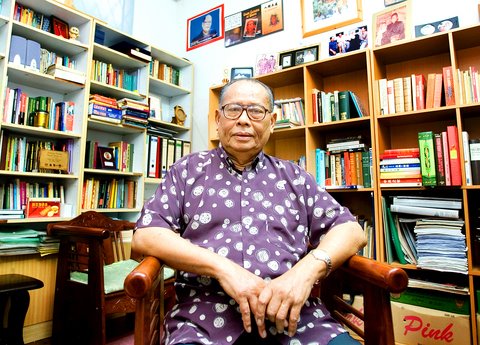
Said Zahari, a former leftist activist, sits in front of his library at his home in Kuala Lumpur.
PHOTO: AP


Dear Censors, MDA and the Information Minister (whoever you may be by the time when you read this),

If Zahari's 17 Years was allowed to be screened, it would have attracted no more than an audience of 50 people crammed into some obscure arts venue. Yes, for a while, it may generate a little buzz, perhaps some debate in history classrooms. But ultimately, interest will wane, and it will end up collecting dust in the archives, and then unearthed ten years later by some researcher for his academic thesis.

It would not have generated more than 10,000 hits on google video. It would not have opened another can of worms on censorship. It certainly would not be a cause for reports such as this, this and this.

Don't shoot me or Pak Said Zahari if Singapore's reputation takes a beating over your banning of my film. You know where to point the muzzle.

With love by your true Singaporean,
See Tong Ming, Martyn


Singapore - Annual report 2008

by Reporters Without Borders

Area: 620 sq. km.
Population: 4,450,000.
Languages: English, Mandarin, Malay, Tamil.
Head of government: Lee Hsien Loong.

A “worthy” successor to his father, Prime Minister Lee Hsien Loong has done nothing to loosen state control over the media. Journalists have a great deal more freedom to cover international news than local affairs. And a political documentary was hit by censorship.

The authorities continued their trial of strength with the magazine the Far Eastern Economic Review (FEER), which has been banned from distribution in the country since 2006, but which is still available online. A court in June rejected a request from the prominent Hong Kong-based monthly to be defended by a British lawyer in a “defamation” trial opened against it last year by Lee Hsien Loong and his father. The judge considered that the suit was not sufficiently “complex” for the lawyer in question. Lee Hsien Loong and his father Lee Kuan Yew took exception to an article in the FEER about opposition leader Chee Soon Juan, whom it termed a “martyr of the country” because of a raft of legal proceedings he has had to face.

The opposition, particularly the Singapore Democratic Party (SDP), bête noire of the regime, is rarely quoted in the media and dissident voices have to resort to using the Internet to express themselves.

The authorities in April declared a sentence of up to two years in jail and a heavy fine would be imposed on anyone suspected of possessing or broadcasting a copy of the documentary “Zahari’s 17 years”, about the 17-year imprisonment of journalist and opposition figure Said Zahari. The film-maker, Martyn See, was forced to hand over the original and copies of the documentary to the ministry of information communications and the arts. In the film, the former editor of the newspaper Utusan Melayu recounts why the government of the time, headed by the father of the current premier, arrested him in 1963 along with several of his associates, under a draconian internal security law. The ministry said “Zahari’s 17 years” threatened “public confidence in the government”. Martyn See’s films can be viewed on the Internet.

A correspondent for Reuters in Singapore, Mia Shanley was forced to reveal the source for one of her stories after two companies took action against the British news agency and the newspapers The Straits Times and The Business Times to force them to reveal the sources for articles dating back to November 2006. The courts systematically returned verdicts in favour of companies, undermining the protection of sources in the country.

Tuesday, February 12, 2008

Film fest disqualifies Martyn See's film


Nation Builders (above) has been disqualified as an entry to the Singapore International Film Festival Short Film Competition as it has failed to meet its entry requirements.

Festival staff Yuni Hadi told me over the phone that since the film has been circulating on the net, it no longer qualifies as a World Premiere, as stated here in its rules and regulations.

4. Entries must be World premieres and must not have been howsoever broadcasted, screened or participated in any competition/festival in Singapore or abroad


(Silly me, but I swear I read it differently two months ago)

The 14 minute film was uploaded on the net on the eve of National Day and subsequently submitted as an entry to SIFF in December 2007. It has not been publicly screened to an audience here or abroad. The disqualification means that the film will not be submitted to the Board of Film Censors.

This is my 3rd submission to the SIFF. The first, Singapore Rebel, was banned in tandem with a 15 month-long police investigation. The second, Zahari's 17 Years, was inexplicably withdrawn by the SIFF and subsequently banned a year later when I personally submit it for an exhibition licence.

As required by law, I will be submitting Nation Builders to the censors shortly. It will join Speakers Cornered, whose status is still yet unknown. (Heard it through the grapevine that Dr Vivian Balakrishnan is taking over the helm at MICA at the first quarter. I should perhaps honour his appointment by submitting Nation Builders then.)

Meanwhile, SIFF is screening a Singaporean-made film about the homeless entitled Homeless FC. It is directed by Lynn and James, who made the East Timor redemption flick Passabe. Needless to say, Homeless FC isn't about the destitutes in Singapore, but in Hong Kong.

Wednesday, January 30, 2008

This Film Is Not Yet Rated


It's been exactly a month since Speakers Cornered was submitted to the Board of Film Censors (BFC). I have yet to receive any word about its status. Meanwhile, the folks who run the BFC, i.e. the Media Development Authority (MDA), ostensibly wants to show off how efficient and transparent their ratings system are by graciously availing themselves in a public event.

Those good servants of MDA, lest you forget, had awarded me a 15 month-long police investigation, some worldwide publicity and two banned films. I think an appreciation of their role in publicising my profile is well overdue so I shall honour their effort by showing up at the forum.

THIS FILM IS NOT YET RATED - Censorship Uncensored

FRIDAY 1st FEBRUARY at 7.30pm The Picturehouse Lounge
FREE & OPEN TO PUBLIC

Find out more about CENSORSHIP IN SINGAPORE for yourself! Curious about the whole film rating process? What are the steps a film must go through for a rating? What does an NC16 rating mean for a film? Join us at The Picturehouse Lounge for a open dialogue session with a panel of industry players who will breakdown the local ratings system and sharing some of their own expereinces with the censorship process. Speakers include the Chairman of the Consultative Panel at MDA, a representative from a Major Film Distribution company and local independent film maker.

RSVP your place at thepicturehouse@cathay.com.sg to avoid disappointment. Subject line:RATED Explores.

A review of the forum (updated 14 Feb)
This Film is Not Yet Rated - Censorship Uncensored

Monday, December 31, 2007

Twice banned filmmaker submits third film

"All this censorship and so on makes no sense to me."- Minister Mentor Lee Kuan Yew, dialogue with Young PAP, Apr 21 2007


Speakers Cornered, a documentary on the standoff between local activists and police during the IMF-World Bank Meetings in Singapore last year, has been submitted to the Board of Film Censors this morning. The application is for the purpose of classification. (Receipt number : A/0712/1018000L)

My two previous films, Singapore Rebel and Zahari's 17 Years, are banned in Singapore under sections [33] and [35] of the Films Act respectively. Both sections were invoked for the first time in the nation's history.

The counter staff at BFC pointed out to me that the timeline for the approval for local productions tend to take longer than imported videos, and that the process can only be expedited once I submit another letter indicating public screening date(s), venue(s), target audience and purpose of exhibition. No concession is made if the applicant is the filmmaker himself. The same spiel was presented to me in January this year when I applied for a licence for Zahari's 17 Years. Then, I had not followed up with any letter. Still, the Ministry issued a public statement three months later to ban the film.

Now I hear you ask - Speakers Cornered has already been uploaded on youtube, so why bother submitting it to the censors now? Am I not asking for more trouble?

Answer : Not at all. On the contrary, I am only acting in accordance to the law as it currently stands.

Section [14] of the Films Act states that "every film in the possession of any person shall be submitted to the Board without any alteration or excision for the purpose of censorship at the owner's risk and expense and at such time and place as the Board may appoint." In other words, the possession of any film or video in Singapore is illegal unless they are approved by the authorities.

The good news is, according to MDA's website, not all videos in Singapore require certification. Exemptions are made for "educational videos, documentaries, programmes for children and pre-1966 movies".

But here's the bad news - such exemptions are not automatic. To qualify for an exemption, one has to make sure that the material do not flout a set of guidelines, and only thereafter can he make an application to the BFC, who will be the final arbiter of what should or should not be exempted. (See here)

Which then brings us back to square one: If you possess a film or video in Singapore, be it imported or self-made, you are required by law to submit the material to the censors for classification, certification or exemption. By default, that makes anyone who possesses an uncertified video culpable of violating the law (and you think I'm the only one guilty of breaching the Films Act?).

Therefore, as we approach a new year, I will attempt to shed my "Singapore Rebel" tag and make like a law-abiding Singaporean by submitting Speakers Cornered to the authorities for classification, as required by law.

At the same time, I wholeheartedly extend my goodwill to all the senior civil servants at the Ministry of Information, Communications and the Arts - by offering them this act of submission in order that they may use it to justify their salary hikes, and also provide an opportunity to make good on their pledge to get "creative."

How will they prohibit a video that's already on youtube? Under which section of the Films Act will they ban a video that essentially records an event in a manner no different from what broadcasters do all over the world? Will they target the filmmaker instead by subjecting him to another 15 months of police investigations? Or will they clear the video and consequently inspire a new wave of Singaporean political and activist cinema, including cause-related campaign videos such as this one? Or will they drag their feet until the newly-proposed media review committee submit their recommendations to the government?

While you hold your breath on this one, do drop by for updates, and have a great new year!

To read the entire Films Act, go to Singapore Statutes Online.

****************************************************

GUIDELINES ON CONTENT THAT CANNOT BE EXEMPTED

by Board of Film Censors

Videos declared for exemption should not violate any laws of Singapore. In addition, videos containing the following scenes /dialogues /themes are not exempted from censorship and should not be so declared.

1. SCENE

Violence
Violence refers to acts of force resulting in pain, injury or death. The following portrayals are deemed as violent acts:
• Repeated hitting/punching/kicking;
• Multiple slashing/stabbing/shooting;
• Blood-letting/flowing/spurting;
• Amputation/decapitation/dismemberment; and
• Any other form of torturous and/or sadistic acts.

Sex and Nudity
Sex and nudity relate to depictions of sexual acts and naked human bodies. Some specific examples are:
• Sexual foreplay;
• Sexually ecstatic facial expressions;
• Sexual intercourse; and
• Male and female frontal nudity.

Drug Abuse
• Scenes depicting or promoting drug abuse.

2. DIALOGUE
• Words with obscene and vulgar connotations.

3. THEME
The overall theme of the subject of the video is deemed to be objectionable on moral, social, religious grounds or detrimental to national interest.

Moral
Examples of morally objectionable themes:
• Depiction of deviant sexual behaviour such as incest, and alternative lifestyles such as homosexuality and lesbianism;
• Promotion of free love, sexual promiscuity etc.

Social
Examples of objectionable themes on social grounds:
• Anti-social behaviour such as gangsterism, vandalism and hooliganism;
• Portrayal of the commission of crimes with details of the techniques used.

Religious and Racial
• Propagating of religion.
• Denigrating any race or religion.

Public Interest
Subject or topic that undermine the interests of public security, national defence and public confidence in the law and its enforcement.

Note: If in doubt of the video's content, you are advised to submit the video for censorship.

Tuesday, December 11, 2007

Videos : Singaporean lawyers petition; Malaysian lawyers march


Singaporean lawyers M. Ravi and Chia Ti Lik submitting a petition to the Law Society of Singapore on South Bridge Road on December 10, 2007. Video by SgHumanRights.
AFP report.


Malaysian lawyers confronting the police in Kuala Lumpur on December 9, 2007. Video source unknown.
IPS report.

Latest : More arrested, including Anwar Ibrahim.

Saturday, December 01, 2007

Speakers Cornered - Complete video now unleashed

I made this video a year ago. It has since been screened in human rights festivals in Taiwan and Malaysia.

Seeing how Singapore's state censors, a.k.a. the Media Development Authority (MDA), is currently pitching itself as a government agency with some serious creative street cred, I may jolly well submit Speakers Cornered for a rating and a public screening license. Let's see how creative they can get by banning a work that's already circulating online.

Watch the entire video here. Chinese subtitles are courtesy of Taipei's Urban Nomad Film Festival.

Thursday, November 22, 2007

Video : Burmese citizens mount protest on Orchard Road

Al Jazeera's video report here.

Watch videos of Orcahrd Road protest here and here.

Burmese citizens staging arguably the biggest unauthorized public protest in Singapore since 1965.

Meanwhile, it's a different story for these two Singaporean activists..

Tuesday, October 16, 2007

One Country, Two Systems - Part ll

"Important for investors and economic growth is the rule of law, implemented through an independent judiciary, an honest and efficient police force, and effective law enforcement agencies."
- MM Lee Kuan Yew, speech at the IBA Conference, 14 Oct 2007


One law for them..

PAP Members of Parliament from the post-65 generation performing a hip hop dance at the Chingay Parade on Orchard Road in February this year. The main objective is to "to laugh at yourself, to have a sense of humour about everything.. Trying to connect with the youth," explains MP Chris de Souza. Watch video of their rehearsal here.

Another for the rest of us.

Citing how "cause-related" events "have a higher potential to stir emotions and controversy", Singapore police has rejected an application for a permit to hold a "Peace For Burma Concert" at the Timbre Bar. Last month, an application by the Substation Arts Centre to hold an outdoor flea market to be manned by 19 civil society groups was also rejected by the police.


One law for him..

CASE executive director Seah Seng Choon campaigning for consumers rights in a march around the Singapore River to commemorate World Consumers Rights Day.


Another for him.

John Tan of the opposition Singapore Democratic Party is being arrested on Orchard Road opposite the Istana. He and three other members of the party were holding placards calling on the government to reveal their business links with the Burmese junta. More pics here.


One law for him...

First aired on CNA in 2002, this video is now being packaged and marketed by local company Innoform Media and is currently on sale in all major bookstores in Singapore. According to this website, the "89-minute two-part documentary takes a look at how Lee brought Singapore to independence, and interestingly gives viewers a glimpse into his personal life."

Somehow, the DVD managed to escape the clauses defined in Section 33 of the Films Act, which essentially prohibits any film that is "directed towards any political end in Singapore". That includes any film which "contains wholly or partly either partisan or biased references to or comments on any political matter", including references to the Government, a Member of Parliament, and "any body whose objects relate wholly or mainly to politics in Singapore, or any branch of such party or body."

Click here for the rest of what constitutes a "film directed towards any political end".


Another for the rest of us.

Singapore Rebel, a 26 minute documentary about opposition activist Dr Chee Soon Juan, is banned by the Singapore Government and its filmmaker was subjected to 15 months of police investigation for alleged violation of the above Films Act. Anyone who is in possession of the video is liable upon conviction to a fine not exceeding $100,000 or to imprisonment for a term not exceeding 2 years.

See also Filmmakers on JBJ threatened

Saturday, October 13, 2007

Videos of bloody crackdown in Burma

Inside Myanmar : The Crackdown


Part ll of this AlJazeera report here.

More videos of crackdown here, here, here, here and here.

"In Rangoon, people say they are more frightened now than when soldiers were shooting on the streets."

The scale of the crackdown remains undocumented. The regime has banned journalists from entering Burma and has blocked internet access and phone lines.

Mark Farmaner of the Burma Campaign UK says the number of dead is possibly in the hundreds. "The regime covers up its atrocities. We will never know the true numbers," he said.

At the weekend the government said it has released more than half of the 2,171 people arrested, but exile groups estimate the number of detentions between 6,000 and 10,000.

In Rangoon, people say they are more frightened now than when soldiers were shooting on the streets.

"When there were demonstrations and soldiers on the streets, the world was watching," said a professional woman who watched the marchers from her office.

"But now the soldiers only come at night. They take anyone they can identify from their videos. People who clapped, who offered water to the monks, who knelt and prayed as they passed. People who happened to turn and watch as they passed by and their faces were caught on film. It is now we are most fearful. It is now we need the world to help us."
The full article
Only now, the full horror of Burmese junta's repression of monks emerges

And Singapore is not the only Southeast Asian country to practise the One Country Two Systems brand of governance.
Burma government holds rally, junta arrests prominent activists

Singapore and Burma: Such Good Friends
By Eric Ellis/Asian Sentinel

Thursday, October 04, 2007

One Country, Two Systems

Marching for consumer rights ...

A public assembly near Singapore's Parliament House to commemorate World Consumer Rights Day. "Thousands of participants" took part in the "nation-wide" march, including a ministerial guest-of-honour. Picture taken on 18th March, 2007 and can be seen here.


but not for human rights.

A member of the opposition Singapore Democratic Party is surrounded by police as she and five others attempted to stage a pro-democracy march towards Parliament House during the IMF-World Bank Meetings held in Singapore. The activists are currently under police investigation. Photo was taken at Hong Lim Park on 16th September, 2006.


White expats can protest ...


Expatriate women gathered on Waterloo Street in Singapore as part of a global action in to support the brave in Myanmar. No report of police videotaping in the vicinity. Not known if police are investigating. Picture taken on Friday, 28th Septermber, 2007 by AP and can be found here and here and here.


while Asians get harassed.

Police [left] are seen videotaping Burmese nationals gathered around the petition table outside the Burmese Embassy in Singapore. Police is investigating. Picture taken on Sunday, 30th September, 2007 by TOC and can be found here.

Police rejects permit for outdoor protest by S’pore student


While prostitutes openly solicits on Orchard Road, Singapore Police would rather harass Burmese petitioners.

------------------------------------------------------

Soldiers hunting down dissidents in Burma

"We have photographs. We are going to make arrests!"

Junta dragging residents from beds in terror patrols at night


Meanwhile, it's business as usual for Singapore Inc.


Tay Za(L), Chairman of Air Bagan and a close business associate of General Than Shwe, and Lim Kim Choon, Director-General and Chief Executive Officer of Civil Aviation Authority of Singapore, toast at the launch of Air Bagan’s maiden flight to Singapore after its arrival at Changi International Airport on September 7. Photo and report by AFP.

Tuesday, October 02, 2007

Guard dogs of St. Martin's Drive

For the past two days, residents in the upmarket apartments on St. Martin's Drive, located off Tanglin Road, have been enjoying free security reinforcements by courtesy of the Singapore Police Force. About a dozen plainclothes officers have been loitering at the road's entrance since Sunday in an attempt to intimidate members of the public from participating in a petition signing exercise outside the Burmese Embassy.

This video says it all.

The police worked on rotating shifts. I arrived at about 11pm on Sunday night and saw a different team from that shown in the above video. Asians arriving on foot or in vehicles had their identity cards checked and subsequently warned that they may be investigated for public assembly should they proceed to the embassy. Curiously, as officers continue to harass the Asians, most of them Burmese nationals, two cars carrying Caucasians whizzed by me. As one officer trained his video camera lens on me, I thought I repay the courtesy, and then some. Below were some members of the team from the Central Police Station stationed on St. Martin's Drive around between 11pm until 1am.


Ong Poh Tuck


Mohd Shafiee


Leng Han Ping


Chee Boon Heng


Neo Wei Kiat


Unidentified officer


Video cameraman handing over duties


Unidentified senior officer who took over shift


TOC Report: Over 400 visit Burmese embassy to sign petition

When a permit is required for compassion - disgusting

Pictures of vigil

More pictures

Thousands dead in massacre of the monks dumped in the jungle


Thousands of protesters are dead and the bodies of hundreds of executed monks have been dumped in the jungle, a former intelligence officer for Burma's ruling junta has revealed.

The most senior official to defect so far, Hla Win, said: "Many more people have been killed in recent days than you've heard about. The bodies can be counted in several thousand."

Read the rest

Sunday, September 30, 2007

By George, do you have blood on your hands?

A young demonstrator shot dead on 27 September in Rangoon.


General George Yeo expressing repulsion at the military crackdown during the United Nations General Assembly.


General George Yeo with Burmese General Thein Shin [left]. This picture was taken in April 2007.

Blood for sand
by John Aglionby

Web of cash, power and cronies
by Eric Ellis


Death by head-injury, bleeding from nose & mouth

Martyn See speaks out on police probe, foreign "interference" and Burma

Cambodia Prime Minister Hun Sen's opening address

Speech at ASEM seminar on human rights

At the invitation of ASEF, I attended the Asia-Europe Meeting (ASEM) Informal Seminar on Human Rights in Siem Reap, Cambodia from the 26th to 28th September, 2007. Billed as a "non-confrontational debate" on freedom of expression, the event was officially opened by Cambodia's Prime Minister Hun Sen. Needless to say, the human rights abuses in Cambodia received short shrift in the forum, although the military crackdown in Burma was put forward as an agenda from the outset. In attendance were over a hundred representatives from governments and civil societies of Asia and Europe, including human rights officials from the United Nations.

The other Singaporean participants were
- Ms Vanessa Chan, the Counsellor-Designate for the Singapore Embassy in Yangon.
- Mr Tan Yew Soon, the Director of Public Communications at the Ministry of Communications, Information and the Arts
- Dr Cherian George, an assistant professor of journalism at the Nanyang Technological University.

At the closing session on the 'Future of Freedom of Expression', I was asked to relate my Singapore experience.

Here's the full transcript.

----------------------------------------------------------------------


By no means am I an expert so I thought I'll regale you with my own personal Uniquely Singaporean experience of having been subjected to a law that restricts freedom of expression.

3 years ago, I made a documentary about a local opposition politician. I was rewarded with a double whammy. Not only did the censors banned the film, they went for the filmmaker. They filed a police complaint against me for alleged violation of section 33 of the Films Act - which basically prohibits the import, production, distribution and exhibition of any film which makes biased references to political matters. The offence carries a maximum penalty of 2 years imprisonment or a S$100,000 fine. So for the next 15 months, I was placed under police investigation. I was not arrested or detained. I merely had to present myself at the police station on a number of occasions for interrogation sessions. Some of my friends were also called in by the police over their relationship with me. In Singapore, the police are legally empowered to obtain phone records from telecommunications companies to assist their investigations.

I was born, educated and have lived all my life in Singapore. Over four decades, Mr Lee Kuan Yew, the Cambridge-educated founding father who now goes by the title of Minister Mentor, repeatedly tells his people that human rights and democracy are ideals invented by Western liberals that bear no relevance to Asian Values. Such notions, he added, does not put a roof over my head or food on my table. Only good governance can provide these things. By that decree, Singaporeans have by-and-large traded our political and civil liberties for economic growth, although not everyone has benefited from increased GDP gains.

There are General Elections but the opposition are unable to put up enough candidates to contest all 84 seats in Parliament. Many Singaporeans live out their entire lives without the opportunity to cast a single ballot. Freedom House says, "Citizens in Singapore are unable to change their governments democratically."

The domestic media is State-owned or State-controlled. Committee to Protect Journalists says, "State control of the media in Singapore is so complete that few dare to challenge the system and there is no longer much need to arrest or even harass journalists. Even foreign correspondents have learned to be cautious when reporting on Singapore, since the government has frequently hauled the international press into court to face lengthy and expensive libel suits. "

Singapore is ranked at number 154th in press freedom rankings by Reporters Without Borders.

The US State Department says, "In practice the government significantly restricted freedom of speech and freedom of the press. Government leaders historically have used court proceedings, in particular defamation suits, against political opponents and critics. Some judicial officials, especially supreme court judges, have ties to the ruling party and its leaders. It was widely believed that the authorities routinely conducted surveillance on some opposition politicians and other government critics."

Amnesty International says that Singapore executes more people on a per capita basis than any other country in the world. The death penalty and corporal punishment are legacies of British colonial rule.

It is a criminal offence for 5 or more persons to assemble in public for a cause without first obtaining a police permit. Again, this is a law that originated from British colonial masters. During the IMF-World Bank meetings in Singapore last year, the police threatened shoot-to-kill measures against violent protesters. Last month, a small group of Burmese nationals attempted to stage a march on Orchard Road, a downtown shopping belt. They were reportedly investigated by the police.

Now, coming back to my case. After 15 months, the police decided to drop all investigations by issuing me a "stern warning" in lieu of prosecution. In those 15 months, no lawyer in Singapore contacted me to offer legal assistance. (Although I did seek and received assistance from human rights lawyer Mr M. Ravi) The only public statement issued locally came from the opposition Singapore Democratic Party, of which its leader was the subject of my banned documentary.

Under this climate of fear and self-censorship, the only tool available to me by way of publicising my story was the internet. So I posted updates of the police investigation on my blog, and immediately it was picked up by news wire agencies based in Singapore. In the ensuing days and weeks, statements were issued by AI, RSF, CPJ and SEAPA. I believe then and now that international attention on my case was a key factor that led to the eventual withdrawal of charges against me.

In the letter of warning issued to me by the police, it stated that if I were to commit the same offence again, "the same leniency will not be shown." Well, since then I've made three more documentaries, all of which deals with political themes. The second of which - an extended interview with a former journalist detained without trial for 17 years in Singapore - has also been banned by the authorities. This time around, however, no police complaint has been filed.

The final twist to this almost farcical saga is that I had earlier sent out copies of my films to international human rights film festivals. Days after the ban was enforced, both the offending films appeared on youtube and google video. As we speak, the banned videos have generated a total of some 190,000 hits.

I'm not sure what the future holds for freedom of expression, especially in countries such as Singapore, but of this I'm certain - even as autocratic leaders accuse the west of interfering in their domestic politics, they DO listen to international opinions because their self-inflated egos demand that they do.

With regards to the situation in Burma, where each passing day of inaction from the international community will lead to more bloodshed, I reiterate this appeal made by Aung San Suu Kyi, whom the Burmese junta has labelled a traitor and foreign stooge. She had said, "Please use your liberty to promote ours."

------------------------------------------------------------------------------

After I spoke, MICA's Tan Yew Soon arose to assure the audience that laws in Singapore are applied equally. (Can somebody please file a police complaint against this DVD for possible violation of the Films Act pertaining to political films?)

Vanessa Chan of the Foreign Affairs Ministry also took to the floor. She reiterated her earlier statements that Singapore does not claim to be a model for anyone and that all rights should be judged by its results. She said that she would never be caught using the term "Asian Values". (Instead, she spelt out "A-s-i-a-n-V-a-l-u-e-s" alphabet by alphabet). She also said that fear is sometimes necessary to avoid worse-case scenarios. Finally, she rounded off her reply by deriding an earlier criticism of Singapore made by a Filipino/Thai participant by saying that "he does not even live in Singapore."

In the spirit of ASEM's promotion of non-confrontational dialogue, I later announced to the audience that the Singapore Government has issued a strong statement condemining the use of force by the Burma's military junta. I said that I fully support the statement and pointed out that it was issued by the Ms Chan's employers, the Ministry of Foreign Affairs. Ms Chan is due to take up her appointment at the Singapore Embassy in Burma next week. I wish her well.