Monday, March 06, 2006

Year of the Political Films

Yeah, but try making one in Singapore ...


Nominee for Best Documentary, 2006 Oscars

Street Fight is a chronicle of a rough and dirty Mayoral campaign in Newark, NJ that pitted the young reformer and Rhodes scholar Cory Booker against the old-style political machine of incumbant Sharpe James. The film is currently touring with the Human Rights Watch International Film Festival with upcoming screenings in Berkely, Philadelphia, and Cincinnati.
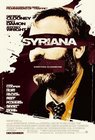


Nominee for Best Orginal Screenplay, 2006 Oscars
George Clooney, Best Supporting Actor, 2006 Oscars

Syrianna is political thriller that unfolds against the intrigue of the global oil industry. From the players brokering back-room deals in Washington to the men toiling in the oil fields of the Persian Gulf, the film's multiple storylines weave together to illuminate the human consequences of the fierce pursuit of wealth and power.



Nominee for Best Adapted Screenplay, 2006 Oscars
Rachael Weisz, Best Supporting Actress, 2006 Oscars

Adapted from the novel by John le Carre, The Constant Gardener is a romantic thriller that sweeps audiences along one man's emotional and global journey to uncover the truth behind a personal loss and a worldwide pharmaceutical conspiracy.


Nominee for Best Director and Best Film, 2006 Oscars


The world was watching in 1972 as 11 Israeli athletes were murdered at the Munich Olympics. This is the story of what happened next. Based on the true story of the Black September aftermath, Munich is about the five men chosen to eliminate the ones responsible for that fateful day


Nominee for Best Director and Best Film, 2006 Oscars

Good Night, And Good Luck chronicles the real-life conflict between television newsman Edward R. Murrow and Senator Joseph McCarthy and the House Un-American Activities Committee. Murrow, and his dedicated staff defy corporate and sponsorship pressures to examine the lies and scaremongering tactics perpetrated by McCarthy during his communist witch-hunts. In this climate of fear and reprisal, the CBS crew carries on and their tenacity will prove historic and monumental.


Nominee for Best Foreign Langauge Film, 2006 Oscars

Paradise Now is about two Palestinian men preparing for a suicide attack in Israel.


HOLLYWOOD GETS REAL

Sunday, March 5, 2006

By JIM BECKERMAN
STAFF WRITER


The biggest upset of this year's Oscar race may have already happened.

"March of the Penguins," a documentary about the child-rearing habits of Antarctic fowl, has grossed more domestically -- as of Tuesday ($77 million) -- than any of the five films nominated for best picture: "Brokeback Mountain" ($75.4 million), "Crash" ($55.4 million), "Munich" ($46.1 million), "Good Night, and Good Luck" ($30.3 million) and "Capote" ($23.4 million).

"Penguins," which leads this year's pack of Oscar nominees for best documentary feature, may portend much -- beyond the obvious fact that everyone loves a bird in a tuxedo.

It suggests that documentary film -- until recently a category on par with "best sound design" in terms of audience interest -- is fast coming of age.

"I think there's obviously a big appetite of Americans who want to understand the world in greater depth than they get in their television news or newspapers," says Thom Powers, who programs documentaries for Toronto International Film Festival.

"Penguins" is the obvious Oscar front-runner in a year that also includes such worthy documentaries as "Enron: The Smartest Guys in the Room," "Murderball," "Darwin's Nightmare" and "Street Fight."

But "Penguins" is also in many ways an oddity, not unlike the flightless bird it documents.

It played in 2,506 theaters domestically -- as opposed to the 97 theaters that played "Murderball" and the 80 to 100 that played "Darwin's Nightmare," much more typical numbers for a documentary film. It was distributed by a major Hollywood player -- Warner -- as opposed to independents like THINKfilm ("Murderball") and International Film Circuit ("Darwin's Nightmare").

It also had a G-rated family appeal that none of the other documentaries -- for that matter, none of the fictional features -- could match.

"It's a movie you can take the whole family to," Powers says. "It's beautifully shot, and it's hard to compete with the cuteness of penguins."

Films like "Penguins," reaching beyond the standard documentary audience, have given the whole genre a shot in the arm. Since 2002, the stock of the Best Documentary Feature category has steadily risen -- fueled by a handful of films that, for one reason or another, have captured the public imagination.

There was "Spellbound," "Bowling for Columbine" and "Winged Migration" in 2002. Then came "Capturing the Friedmans" in 2003 and "Super Size Me" in 2004 -- also the year of "Fahrenheit 9/11," which, while not nominated, grossed more than any recent documentary ($119 million).

"I think we live in pretty serious times, and I think in serious times people are interested in issues," says Fred Simon, executive producer for the Center for Independent Documentaries, based in Boston.

Several of this year's nominees are clearly "issue" movies.

"Enron: The Smartest Guys in the Room," by Alex Gibney of Summit, gives an in-depth look at the predatory mega-company whose crooked dealings (and connections to the Bush administration) are still front-page news.

"Darwin's Nightmare," by Hubert Sauper, is about a predatory fish -- the Nile perch -- that has colonized and destroyed Africa's Lake Victoria. Much as, the film argues, the Europeans who introduced it have colonized and destroyed Africa.

"Street Fight," by another Summit native, Marshall Curry, is a look at the down-and-dirty politicking in Newark's mayoral race four years ago, in which five-term Mayor Sharpe James swift-boated newcomer Corey Booker using every smear in the book.

The two other films might be considered "feel good" documentaries.

"Murderball," by Dana Adam Shapiro and Henry Alex Rubin, about quadriplegics whose particularly brutal form of wheelchair rugby has become an international sport, is arguably upbeat in a thrash-metal way.

And then there are those penguins -- whose tender nurturing of their offspring through a brutal Antarctic summer has so touched audiences.

The schism between the two kinds of documentaries -- upbeat vs. downbeat, "feel good" vs. investigative or propagandistic -- is as old as the documentary film itself.

As far back as the 1920s, Hollywood documentaries like Robert Flaherty's 1922 "Nanook of the North" (about the struggles of an Eskimo family) and Merian C. Cooper's 1925 "Grass" (about migrating Iranian tribesmen) captured a large audience by telling simple stories of exotic peoples -- without sermonizing. This is the tradition to which 1950s Disney documentaries like "The Living Desert," National Geographic specials and ultimately "March of the Penguins," belongs.

But early on, others saw the potential of documentaries to expose abuses, right wrongs and plead causes. Films like Pare Lorenz's 1934 "The Plow That Broke the Plains" (about the dust bowl) and Herbert J. Biberman's 1954 "Salt of the Earth" (about the abuse of mine workers) paved the way for Michael Moore and for films like "Darwin's Nightmare" and "Enron" -- all miles away, both geographically and spiritually, from those cute little emperor penguins.

" 'Penguins' comes out of a completely different genre than the other films," Powers says. "It comes out of the natural history genre, the kind of films that National Geographic made famous. In a better world for documentary filmmakers, there would be more than one category of award, something that would put 'March of the Penguins' against other natural history films. It's a completely different kind of filmmaking."

Apart from the pure luck that brought movies like "Penguins" and "Fahrenheit" to audiences at exactly the right time, several other things have converged to create what amounts to a documentary renaissance.

One is the sheer number of documentary films being made right now, thanks to digital video.

"To give you an idea of the cost differential here: A 10-minute roll of film costs about $300 to purchase and process," Powers says. "So that's $300 for every 10 minutes. A 60-minute videotape costs $8."

That's pretty much how "Street Fight" came about, for instance. Marshall Curry had never made a documentary when he decided to cover the James vs. Booker mayoral race in Newark with his new digital video camera.

"I just bought a camera and convinced the Booker people to let me film their campaign," he says. "I began shooting in January of 2002 and finished in May. It took me three years to edit after that."

The reduced production costs have not only allowed more people to make documentaries, but it has allowed them to make better ones -- by staying with a story longer, Powers says.

"It results in a much richer story," Powers says. "Take 'Murderball' or 'Street Fight,' for examples. What makes those films so satisfying is the really rich narrative that comes out of hanging around for a long time, for every minute you can."

The other thing is the audience itself: starved for solid news and in-depth information in a sound-bite world.

"Enron: The Smartest Guys in the Room" goes into the Enron scandal with a depth and detail that no news broadcast or "60 Minutes" expose could match.

"People are more interested in examining things they're concerned about," Simon says. "I think documentaries are a natural way to do that."

Friday, February 17, 2006

Families of political detainees : An account

The best years of Singapore's economic development were also the darkest, politically.

From independence in 1965 to the double-digit growths of the 1980s, dozens, perhaps hundreds, of political detainees remained incarcerated in Singapore's prisons, without trial. While very little is known about the lives of political detainees in Singapore, even more overlooked are the families of these detainees.

Below is a rare account by Salamah bte Abdul Wahab, the wife of political detainee Said Zahari, on how she struggled to raise her family, in the absence of her husband and father of her four children, for 17 years.

The interview was recorded by Michael Fernandez in Malaysia a few years ago. An ex-detainee himself, Mr Fernandez told me recently that among the hardships faced by families of political detainees, the family of Said Zahari had probably suffered the most.

Salamah passed away on December 29, 2004.

The Scars of Detention
By Michael Fernandez


Said Zahari and Salamah at their 40th Anniversary in 1995


In July 1961, the Utusan Melayu staff went on strike in Kuala Lumpur and Singapore when UMNO wanted to control its editorial policy. Said Zahari ,its editor-in-chief, not only lost his job but also was banned from entering Malaya by the Tunku.

It was lifted by Dr.Mahathir Mohamed in 1989 when he was a Singapore citizen. For the next one and a half years during this politically ferment period he gave seminars and talks to various civic groups - students, media, and trade unions.

I knew Said Zahari's family quite well; I was able to have a frank exchange of views and information a few weeks ago at their home (Subang Jaya USJ).The whole family was there: Said and his wife Salamah, their eldest son, Roesman older daughter, Rismawati, Norman, and the youngest, Noorlinda and also most of the grandchildren.

During the early hours of the morning of 2nd Feb 1963, a team of Internal Security Officers in Singapore led by ASP Hashim arrested Said Zahari. About 120 leftwing activists were also detained in the Operation Cold Store. Salamah bte Abdul Wahab, the wife of Said, whose kids Roesman (6 years), Rismawati (5), Norman (3) who was adopted by Salamah's sister (he was not around), and the youngest, to be born a few months later, was perhaps kicking her mother's womb in protest against the ISD officers. On seeing the silent tears of Salamah, ASP Hashim tried to comfort her : "Don't worry, cik Salamah, we are taking Encik Said...only for a while."

Thereafter, Salamah was always looking through the main door everyday for a taxi or a car to stop and let out Said. Three days went by, no sign of Said;. A week past, and still no sign of her husband. She tried to pacify her two older children saying, "Bapak would be back soon. He is away on work!"


It was not until three weeks later that she was allowed to see him for a brief 20 minutes in the Central Police Station lock-up in Singapore. She was upset with ASP Hashim for his "for a while" statement, a fellow Malay and a Muslim. She felt there was no need for him to lie to her. She found it difficult to forgive.

MF: I believe that while Said was working, you never went to work. You stayed at home to look after your husband and children. What did you do?

Salamah: For the first nearly six years, we lived with my parents in Singapore. My father Abdul Wahab, a well-known jockey/trainer, had a few houses in Singapore, KL, Ipoh and Penang. We hardly experienced any difficulties. The children went to school regularly. Little Linda was going to K.G. II Chinese Medium, and some of Said's political friends came regularly to the house to help Linda in her studies, particularly Chinese.

MF: After your parents moved out to live in KL, what did you do to earn a living?

Salamah : I sold hawkers food. At that time, Roesman (15) and Rismawati (14) had only a vague idea that their father was a "political detainee". They could not understand its true meaning. For that matter, I too have only a hazy idea of what "political detainee" meant. At times, both Roesman and Risma used to grumble. Because their father was cooped up in prison, they had to do a lot of chores which Bapak should or would have done.


They had to get up very early at 5.00 am, cut vegetables, wash the fish including the ikan bilis, boil and cut the eggs, wash and cut the banana leaves, boil the rice and other little chores. But the grumpiest part of their daily routine was rushing back to the hawker stall at Kallang Place immediately after school in order to help wash up and pack up the pots and pans. In those days it was not easy to get a trishaw to go home. On the way, I used to drop at the Geylang Serai market to buy the groceries for the following day. Both Roesman and Risma had to come back to the market to carry the things back home. Thus the children had very little time to study or play with other children of their age. It was tough for them and I must admit that quite often for small mistakes, I used to cane them. I vented all my frustrations on them. And if the beating was at night, the older ones used to run out of the house and the next victim was the smallest, Linda!

At this point, Linda, who was seated on the floor leaning against her mother's lap, gestured to me the beatings she used to get! The whole family burst out laughing at her precise gestures.

It was on these occasions that I longed for my husband to be beside me to comfort me, to advise me what to do, to lighten my aching burden of responsibilities, to help me rest from these daily increasing problems which were taking a heavy toll on my nerves. And I often had splitting headaches .

Many a time I felt like giving up in despair, but every time I thought of doing that, the thought of facing Said after that was the shame I could not think about. But what kept me going was the promise I made to Said when he teasingly asked me once and I replied rather heroically," I'll carry on somehow, don't worry."

MF: You had an operation at the Singapore General Hospital. When was it ,Salamah, Is it ok to talk about it? I hope its not too painful to dwell on it.

Salamah: No. It is a bit painful still to recall. Yes, it was one of the darkest trials of my life. It was in June 1968. I was lying semi-conscious in the hospital after my operation to remove my cancerous breast. In my heart I really wished that the operation would free me from this cruel world. When I was admitted, our family friend, Dr Beatrice Chen, a kidney specialist, and wife of Dr Lim Hock Siew, a fellow detainee with my husband, did not tell me that I had cancer, that my breast was to be removed! I heard the truth from Said's mouth when he was brought to the Hospital, escorted by two Internal Security Officers.

CONFLICT WITH THE AUTHORITIES

During the Interview, Salamah related a few incidents she could remember vividly.

On one occasion, the Internal Security Officers at the weekly family visit in Changi Prison introduced a rule not to allow more than two people at a time. Salamah brought her two older children, Roesman and Rismawati. They would not allow Risma in. It was a human tug-of-war between Salamah on one side and an ISD officer on other side. The little Risma provided herself as the "rope". Salamah shouted and cursed them for their inhuman behaviour, till they gave up in despair and cancelled the "rule of two only."

Another rule they introduced was not to allow detainees to receive cooked food from home except on festive occasions like Chinese New Year, Deepavali, Hari Raya Puasa and Hari Raya Haji. On a Hari Raya Puasa occasion, the ISD officers wanted to cut up the ketupat (steamed rice in a thatched-leafy container) into several pieces for "security" reasons. Salamah protested and scolded them. "These are for human beings to eat, not for animals!", she lashed out at them. When she angrily picked up the bunch of ketupat to throw at them, they relented and gave in. They even wanted to cut up the chicken in the chicken-curry. Her outburst was so furious that they gave up but warned her that it was the last time she would get away with it.

She was also unhappy with the Singapore authorities for discriminating her. Though she was born in KL, she lived most of her life in Singapore. She studied in the Methodist Girl's School in Singapore. In 1968, when she applied for a hawker's licence to sell food, the Government turned it down, saying she was a Malaysian. She had to rent a stall to sell food. Quite often, the stall-owners got into trouble if they were not around whenever the health officer came to inspect the stalls.

CONFLICTS WITH THE RELATIVES

Perhaps the most heart-rending trauma that Salamah, the wife of Said Zahari, experienced was from the relatives of both sides - hers and his. When the newspapers were howling mad at Said's friendship with the Brunei rebel leader Azahari and his friendship with Lim Chin Siong, Mahadeva and others, Salamah came under increasing pressure from the relatives. They often hinted unkind words; sneered at her helplessness; poked fun at her children about their absent father; made snide remarks about her freedom from her husband.

Salamah related to me an incident that took place in her mother's house in late 1968 when her parents were preparing to move to KL permanently. It was a few months after her cancer operation and just after she started selling food at a hawker's stall. Salamah's mother invited Said's mother, some of his brothers and his sister for a kendoori (a Malay feast) in her mother's house. Apart from her parents, her sisters and a couple of her brothers were also present.


It was a rare occasion that Salamah witnessed. When all were assembled in the hall, Said's mother asked her about the food business. When she told her it was "susah"(difficult), she added, "memang-lah" (of course, it was difficult).

Said's mother continued, "Did you tell Said it was tough?" When Salamah didn't answer, Said's mother shouted, "Tell me ,why didn't you tell him? Why didn't you ask him to come out? To look after you and his children? Why?"

"I have never seen Said's mother so angry", Salamah recounted to me.

"I answered rather meekly, 'I didn't want to upset Said unduly'.

She lashed out again, "What rubbish are you talking?"

Then a female voice, who shall remain unnamed ,said, in an even tone, "Listen, we all wish you and the children a good life. You can't have that by selling hawker's food. You must persuade, no, force him to come out. If he is stubborn, give him an ultimatum and then divorce him and get married again. You are still young!"

Then several voices murmured, "betul!" (true) .

I couldn't take it any more. Then I shouted, "I can't do that!"

Then her own mother also added, "It's for your own good."

Then another female voice shouted sarcastically, "She doesn't want to ask Said to come out because she can be free to do what she wants."

These cruel words pierced her like stab wounds. Covering her tearful eyes, Salamah ran out of the house, wanted to escape from everybody and everything. She went behind the house and just sobbed and cried her heart out.

Their words were certainly cruel, but were they malicious? Or were they uttered out of genuine concern for her and her chidren? Salamah cursed her husband within her heart for putting her through such malicious attacks, but she recovered soon enough to take comfort in her passionate love for her husband. Their heartless words only strengthened her love for her husband, and faith in Allah, and
she prayed hard for greater patience and strength to bear these and more tribulations.

THE CHILDREN

A few weeks ago, I interviewed Said Zahari, his wife Salamah, his four children and most of his 16 grandchildren who were there, and whom Said described as his "only wealth", at his small terrace house in USJ, Subang Jaya, KL.

Roesman, 44, was a tower of strength to his mother and his brother and two sisters. Though he could not understand at first why bapak(father) was sitting in prison while he and his sisters toiled with his mother to support the family. Gradually when he understood that bapak was struggling even in prison to fight for social justice, he adopted his father's ideals as his own and tried to live up to it as the loyal son of Said Zahari. Roesman studied law at a private college in KL but had to abandon it halfway in order to go back to Singapore to help his mother sell food. He worked hard to support his mother, lived as an example to his brother and sisters, later to his wife and his two daughters of whose achievements he's justly proud.

Rismawati, literary-minded like her father, was the letter-writer for the family. She used to give her father all the news of the family in her weekly letters. With her husband, she runs a kindergarten and childcare centre.

Norman Noordin alias Norman Said was adopted by his mother's older sister, a nurse, Saliah, who married Dr. Raja Ahmad Noordin (now Tan Sri Raja Ahmad Noordin) . He was educated in the UK and US. He's now a senior executive in a private firm. Norman lives near his natural parents and visits them regularly.

Noorlinda, the baby of the family, has six children of her own to look after. However she refuses to have a maid even though her engineer husband advised her to have one. She was in her mother's womb when papa was arrested in 1963. She had no feeling for her father until very recently. Though she's 38, she told a human Rights Convention in KL, when she was only 12, in 1975, the ISD officers in Singapore never allowed her father to touch her or cuddle her, and that she could only speak to her father over the phone whenever she visited him in prison. She grew up a stranger to her father.

Said's two eldest grand-daughters (Roesman's) are Shirin and Shauna, both in their late teens, told me that, "toh (grand-dad) has been and will always be our role model". Shirin just completed her Diploma in Mass Communication and likely to follow her grandfather's footsteps, and Shauna is entering International Islamic University to study law. Both are not only lovely-looking but are very bright, particularly very skilful in English language. They had their early education in Singapore.

Conclusion:


Who sacrificed and suffered the most? For the family and for the country: Was it Said Zahari the husband, or Salamah, the wife?

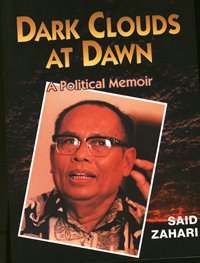
It is obvious, as Said Zahari himself stated in his dedication to the book Dark Clouds At Dawn (A Political Memoir) that her "sacrifices and sufferings were a thousand times more than mine" . The real heroine in this tragic story is Salamah.

Why did she sacrifice the man she loved so passionately to Changi Prison, the husband on whom her children and she depended, the father of her young kids? Was it for some personal glory or for some financial reward? Or for some high position in society? She went through this trauma for 17 years, for what?

Some would call her a "fool", some others would merely "pity" her, and very few would really support her unwavering stand. Was the sacrifices and suffering she went through only for the love of her husband? Was it anything to do with Said Zahari's ideal of democracy, social justice and press freedom which is still a burning issue?

I asked Salamah (now 65): Have all the wounds you received, both physical and emotional from various sources, been healed ever since Said lost his editorship job in 1961?

She hesitated for a moment, frowned and knit her eyebrows and said slowly and deliberately,"Most of them have healed. But the big scars like the one on my breast will never heal...Would be permanent scars to remind both of us what we went through together."

Michael Fernandez.

(The writer, in Singapore, has been a long-time family friend of Said Zahari and was with him in the Changi Prison in Singapore)


Said Zahari and Michael Fernandez will be speaking at Detention-Writing-Healing on 26 February, 3pm at the Esplanade Recital Studio.

Sunday, February 12, 2006

Heady days of newspapers and politics

Catching up with... Said Zahari: Heady days of newspapers and politics

WAN HAMIDI HAMID
Feb 12
New Sunday Times


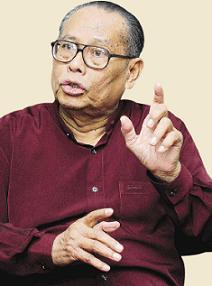
In 1961, a young, idealistic chief editor led a strike in Kuala Lumpur trying to avert Umno's takeover of Utusan Melayu. Banned from Malaya, he returned to Singapore where two years later he was detained without trial for 17 years. Former chief editor Said Zahari tells his story to WAN HAMIDI HAMID.

HE must be one of the unluckiest political leaders alive. Less than four hours after he became chairman of opposition party Partai Rakyat Singapura, Said Zahari was arrested.

Said was among more than a hundred detained in Singapore's crackdown on the opposition under Operation Cold Store.

He was held without trial for 17 years. Chia Thye Poh, who spent 27 years in detention, was the longest-serving political detainee in Singapore. (My note : Chia spent a total of 32 years under ISA)

Now 78, Said is probably better remembered in Malaysia than in Singapore for his key role in a historical event here.

He led the journalists and staff of the Utusan Melayu to strike for 91 days in 1961, fighting to keep the newspaper free and independent of political control.

Towards the end of the strike, Said returned to Singapore for a short visit. That was when then Prime Minister Tunku Abdul Rahman declared him persona non grata, barring him from returning to Malaya.

He spent the next two years in politics in Singapore before Special Branch officers came knocking in the early hours of Feb 2, 1963.

Operation Cold Store crippled the opposition in Singapore.

At the time, he thought he would get out soon.

"I never expected I would spend such a long time as a political prisoner," said the ever-smiling Said.

He recently published a second volume of memoirs, on his long detention. Dalam Ribuan Mimpi Gelisah (The Long Nightmare). He had earlier written Meniti Lautan Gelora which was published in 2001.

When he joined Utusan Melayu in Singapore in 1951, the region was in turmoil. Like other Malay journalists of the time, Said was heavily influenced by Sukarno’s struggle for Indonesian independence from the Dutch.

"He proved that we could oust the colonialists and rule our own country."

Said acknowledged he had been drawn to the People's Action Party when it was formed in 1954.

He got to know its young leaders - Lee Kuan Yew, Devan Nair - and fellow journalist A. Samad Ismail. Said found PAP more progressive than others of the time.

It was also the year Utusan sent the Singapore-born Said to Kuala Lumpur to become its news editor.

Pro-Umno even then, Utusan supported the Alliance in the first council elections in 1955 "because Umno was fighting for independence".

After Independence, Utusan continued to press the new Malayan Government for land for farmers and workers' rights.

The Tunku was unhappy with criticism that Umno was continuing to protect the interests of the British, who still decided defence, foreign and economic policies.

"Tunku even called me for a one-on-one discussion. I argued that Utusan fights for the Malays, especially the poor Malays."

Many Umno leaders wanted Utusan to become its mouthpiece, but the editorial leadership stuck to its guns. When Said was made chief editor in 1959, the brewing crisis deepened, leading to the strike.

When he could not return to Malaysia, the new Utusan management under Umno control washed their hands off him.

"As you know, it was the shortest political career for me," he said.

He believes PAP founder Lee thought he would be a political threat.

"That's why after failing to obtain any confession from me, during my eighth year in detention, Lee declared publicly that I was a communist.

"That was a lie. (It was) to discredit me and my colleagues for believing in Malayan nationalism, for totally opposing any form of colonialism.

"I know what is nationalism, what is communism. I read Marx, Mao and other works on the economy and politics. I read the Quran and the Hadith.

"I believe Islam is much more than a political philosophy and it surpasses ideologies such as communism, and Islam is definitely the best for me."

He didn’t sound bitter at the interview, but in his latest book, he described Lee as vicious, arrogant and ruthless.

In 1979, Said was released at the age of 54, and joined wife Salamah to start a new life.

"I was too old for mainstream journalism and politics was extremely different from what it used to be."

In 1989, the Malaysian Government revoked Tunku’s order. In 1994, he came back and has not returned to Singapore since. (My note : Said made short trips to Singapore after 1994, but has not crossed the causeway since the launch of Dark Clouds At Dawn in 2001. He remains a Singapore citizen.)

Said, who suffered a stroke in 1992, is now writing his third book on his memoirs of his journalistic and extremely short political life before he turns 80.

"After that, God-willing, I want to write about my best friend and companion, my wife Salamah who passed away a year ago."

He lives alone but is always in the company of his daughter and her children. He walks with the aid of a walking stick, both legs weak from the stroke.

After finishing the book on his wife, he hopes to write on Malaysia-Singapore politics, seen through the eyes of a journalist.

"I can only write. That's all I know and will continue to do," he said.

He attends seminars and conferences to talk about journalism and politics, and Press freedom.

Comparing journalism today with that of his time, he said: "The attributes are different. It is unfair to compare them. During my time, no political parties controlled the Press.

"My advice to journalists today is that if you can do a little bit, just do that little bit. It's better than not doing anything."


--------------------------------------------------------------------------------


MEMORABLE JOURNEY

1928 - Born, Singapore

Early 1940s - Tanglin Malay School, Singapore

1942 - Japanese military invaded Singapore

1944 - Joined Japanese Teachers Training College, Singapore

1945 - Japanese surrendered; end of World War Two

1947 - Sat for Senior Cambridge examination

1951 - Joined Utusan Melayu, Singapore

1954 - Sent to Utusan Melayu Kuala Lumpur bureau as News Editor

1959 - Appointed Utusan Melayu Chief Editor, Kuala Lumpur

1961 - Led the Utusan strike, Kuala Lumpur

1961 - Declared by Tunku Abdul Rahman as persona non grata ; barred from entering Malaya 1963 — Elected chairman of Partai Rakyat Singapura; arrested under Preservation of Public Security Ordinance

1963-1979 - Detained without trial as political prisoner, Singapore

1989 - Malaysian Government revokes persona non grata order

1994 - Moved to Malaysia with family

1996-1999 - Fellow of Universiti Kebangsaan Malaysia

2001 - First memoir Meniti Lautan Gelora published; English version Dark Clouds at Dawn published in Kuala Lumpur

2002 - Chinese version of Meniti Lautan Gelora launched in Hong Kong

2004 December - Wife Salamah Abdul Wahab dies

2006 February - Second volume of memoirs, Dalam Ribuan Mimpi Gelisah, published in Kuala Lumpur

Monday, January 16, 2006

Mahathir may launch Said Zahari's book

Ex-top editor re-lives days in detention

James Wong Wing On
MALAYSIAKINI
Jan 9, 06 12:49pm

The second part of the memoirs of former Utusan Melayu editor-in-chief Said Zahari will be published in Bahasa Malaysia, Chinese and English.

It is believed that the publication will be launched by former premier Dr Mahathir Mohamad in Kuala Lumpur soon.

The first part, Dalam Ribuan Mimpi Gelisah: Memoir Said Zahari, was translated into two other languages in 2001, with the English title being Dark Clouds at Dawn.

Singapore-born Said, now 77, was among the longest detained political prisoners of the Lee Kuan Yew government.

On Feb 2, 1962, he was held under the Preservation of Public Security Ordinance based on allegations that he was a communist and an agent of Indonesia. It was in the wake of a controversial strike he had organised among Utusan journalists against the takeover by Umno.

However, up to the time of his release in August 1979 at the age of 54, he was never charged or tried in a court of law. He spent a total of 17 years in detention - about a quarter of his life. Human rights watchdog Amnesty International declared him a 'prisoner of conscience'.

In the forthcoming publication, Said will formally call Lee (photo) an "Anglo-American pawn" (tali-barut Anglo-Amerika) and accuse him of acting on behalf of the "neo-colonial" political, economic and strategic interests of Britain and the United States in Southeast Asia during the Cold War.

Said will also tell his version of history of the anti-colonial struggles in Singapore and Peninsular Malaya as well as other parts of Southeast Asia, including Sarawak, Brunei, Indonesia and Vietnam.

Details of detention

The 265-page memoirs detail his life and experiences while under detention, including being interrogated by the Special Branch and being held in solitary confinement.

He will relate the physical and psychological tortures inflicted on fellow detainees like Lim Chin Siong, and the mental illnesses that some suffered as a result of torture.

While under detention, Said learnt the Chinese language from fellow detainees who were once student leaders of the now defunct Nanyang University.

Said will also reveal that, over the past few years, he has visited several top leaders of the Communist Party of Malaya such as Abdullah CD, Chin Peng, Rashid Maidin, Suriani Abdullah (Eng Ming Ching) and Abu Samah Mohamad Kassim in southern Thailand to conduct his research into the historical background of Malaya and Singapore in the 1950s and 1960s.

He also had a long-standing intellectual relationship with the late Dr Alijah Gordon, an American who passionately supported the Palestinian cause of national liberation.

On the current situation in Malaysia, Said expresses strong empathy with former deputy premier Anwar Ibrahim and calls him a "statesman". However, he is also critical of some aspects of Anwar's style of political workings since being released from prison in September 2004.

Said calls for a reconciliation between Mahathir and Anwar, well as for the abolition of the Internal Security Act which allows for indefinite detention without trial.

The author is best known for leading a three-month strike by journalists and other employees in 1961, at then independent Utusan Melayu in Kuala Lumpur. As its editor-in-chief, he was opposed to the takeover of the newspaper by Umno.

While Said was visiting the newspaper’s Singapore office, Malaysian premier Tunku Abdul Rahman declared him persona non grata and banned his re-entry into Malaya.

The order was revoked on May 26, 1989 by Mahathir and Said's family moved to Malaysia in 1994.

Two years later, Said was appointed a guest writer by Universiti Kebangsaan Malaysia. In 2003, he was made a Resident Writer of official national security online publication Buletin Malaysia.

______________________________________________________________________

Books on ISA by Singaporean authors


To Catch A Tartar by Francis T. Seow
Published in 1994, copies of the book mysteriously disappeared from the shelves of Select Books at Tanglin Shopping Centre days after they arrived. It has never surfaced in any bookstore or library in Singapore since then.


To Be Free by Dr Chee Soon Juan

Apart from Select Books, no other bookstore in Singapore would dare carry this title. However, it is available for loan in most public libraries. The author has been prosecuted and fined for hawking the book on the streets.


Dark Clouds At Dawn by Said Zahari

Said Zahari launched his first book in 2001, alongside Comet In The Sky : Lim Chin Siong in History

Both titles are still available at Select Books.

Pak Said, as he is affectionately known in Malaysia, will launch The Long Nightmare : 17 Years in Lee Kuan Yew's Prison in Malaysia next month. Expect the book to meet the same fate as Francis Seow's To Catch A Tartar.

Tuesday, January 10, 2006

Said Zahari and ex-detainees to speak at arts forum


Straits Times,Jan 7, 2006
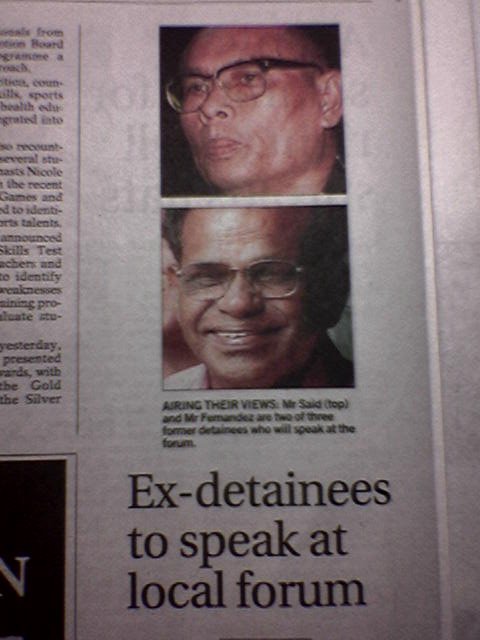
Ex-detainees to speak at local forum

By Ken Kwek

FORMER journalist and opposition figure Said Zahari is among a group of former political detainees who will speak at an arts forum next month.

Organised by The Necessary Stage, the forum on Feb 26 is part of the Singapore Fringe Festival.

The other speakers include two other ex-detainees, lawyer Tan Jing Quee and
former trade unionist Michael Fernandez. Also on the panel is playwright Robert Yeo, who wrote Changi, a tragic drama about political detention in which the lead character was inspired by Mr Fernandez.

They will take part in a discussion entitled 'Detention - Writing -
Healing'.

Mr Fernandez, 71, who was detained from 1964 to 1973 on suspicion of being a communist, said the forum was not a platform to argue his case politically or to refute the charges previously made against him.

'It is simply an occasion for healing, for sharing one's experience with a younger generation of Singaporeans who weren't around during those tumultuous years.'

Mr Said, 77, a Singapore citizen with Permanent Resident status in Malaysia, said he was 'rather surprised' to be invited to a public forum to air his views in Singapore, given his criticism of issues such as the Internal Security Act, which gives the Government powers of detention without trial.

'Such an event would not have taken place in the country even five years ago,' said Mr Said, who is now an academic in Kuala Lumpur. 'Perhaps there is a slightly more open political climate now,' he added.

The former editor of the Malay newspaper Utusan Melayu was also president of opposition party Parti Rakyat Singapura. In 1963, he was arrested in Operation Cold Store, a government security operation which saw 111 left-wing politicians and trade unionists being nabbed for suspected subversive activities.

He was released in 1979 at age 51 and became editor of the economic journal Asia Research Bulletin. He moved to Kuala Lumpur in 1992 and took up a fellowship four years later at the Universiti Kebangsaan Malaysia. The first volume of his memoirs Dark Clouds At Dawn was published in 2001. The second installment will hit Malaysian bookstores next month.

He is also the subject of a new film by local filmmaker Martyn See, titled Zahari's 17 Years.

Mr See, 36, has not decided when or where he will premiere his 50-minute film, but said he hoped it would not suffer the same fate as his last film.

Singapore Rebel, about opposition leader Chee Soon Juan's clashes with the Government, was deemed an illegal 'party political film' and banned by the Board of Film Censors last March.

Of his new film, Mr See said: 'Most Singaporeans, especially those from the younger generation, don't know who Said is. But his story is relevant, and offers an important if different view of Singapore's history.'


Today Weekend, January 7, 2006


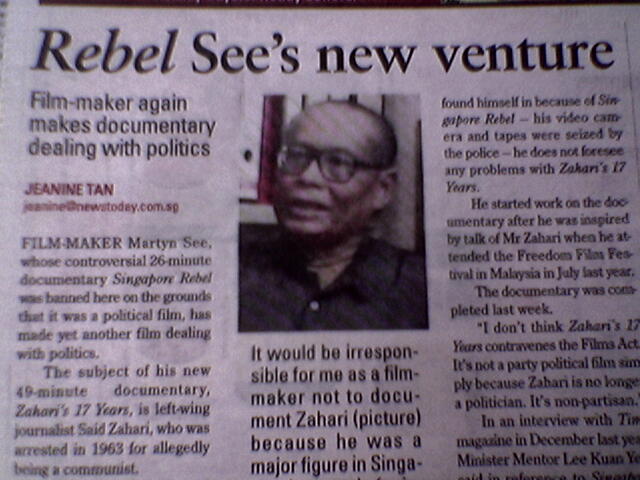
Rebel See's new venture

Film-maker again makes documentary dealing with politics

Jeanine Tan
jeanine@newstoday.com.sg

FILM-MAKER Martyn See, whose controversial 26-minute documentary Singapore Rebel was banned here on the grounds that it was a political film, has made yet another film dealing with politics.
.
The subject of his new 49-minute documentary, Zahari's 17 Years, is left-wing journalist Said Zahari, who was arrested in 1963 for allegedly being a communist.
.
Mr Zahari, 78, was detained without trial for 17 years in Singapore. Prior to his arrest, he had been banished from Malaysia for being a part of a strike involving Malaysian newspaper Utusan Melayu.
.
A Singapore citizen, he now lives in Kuala Lumpur.
.
"It would be irresponsible for me as a film-maker not to document Zahari because he was a major figure in Singapore's struggle for independence.
.
"He is a living document of the leftist struggle for independence," Mr See, 37, told Today.
.
"Zahari's story is an alternative take on the history of Singapore that was presented in the Discovery Channel's The History of Singapore."
.
Despite the trouble Mr See found himself in because of Singapore Rebel - his video camera and tapes were seized by the police - he does not foresee any problems with Zahari's 17 Years.
.
He started work on the documentary after he was inspired by talk of Mr Zahari when he attended the Freedom Film Festival in Malaysia in July last year.
.
The documentary was completed last week.
.
"I don't think Zahari's 17 Years contravenes the Films Act. It's not a party political film simply because Zahari is no longer a politician. It's non-partisan."
.
In an interview with Time magazine in December last year, Minister Mentor Lee Kuan Yew said in reference to Singapore Rebel, which chronicles opposition politician Chee Soon Juan's political activities: "Well, if you had asked me, I would have said, to hell with it.
.
"But the censor, the enforcer, he will continue until he is told the law has changed. And it will change ... "
.
"The making of Zahari's 17 Years wasn't intentional, the subject matter just came up.
.
"I find myself drawn to people who struggle against the odds."

Friday, January 06, 2006

Zahari's 17 Years - a new film by Martyn See


Zahari's 17 Years Running time : 49 min

Synopsis

In the early hours of 2nd February 1963, security police in Singapore launched Operation Coldstore - the mass arrests and detention of more than a hundred leaders and activists of political parties, trade unions and student movements, for their alleged involvement in "leftist" or "communist" activities. One of those arrested was former newspaper editor Said Zahari, who had been appointed the leader of an opposition party just three hours earlier. A staunch anti-colonialist, Zahari had assumed that the mass arrests, set against the backdrop of Singapore's struggle for independence, was no more than yet another turn of event in a politically volatile era. Freedom for him and the others, it seemed, would be secured once Singapore gained full independence. On 9th of August 1965, by way of its separation from Malaysia, Singapore finally gained full independence and sovereignty. And as the republic embarked on a determined quest for economic prosperity, it dawned on Zahari that his new-found Singaporean citizenship did not accord him freedom. By the time he was released in 1979, he had spent a total of 17 years in detention without trial. He now holds the distinction of being the second longest-serving political detainee in Singapore after Chia Thye Poh. Ex-detainees of the Internal Security Act, which allows for indefinite detention without trial, are often reluctant to publicise their experiences. Zahari's 17 Years marks the first time that an ex-political detainee has broken his silence on film. Said Zahari's upcoming book, entitled "The Long Nightmare - 17 Years in Lee Kuan Yew's Prison", is the second volume of his trilogy of memoirs which recount his experiences in detention and the anti-colonial struggles of his generation. Director
Zahari's 17 Years is directed, shot and edited by Martyn See. Martyn See is currently undergoing police investigation for his first film, 'Singapore Rebel', which has been banned by the Singapore authorities for violating the Films Act pertaining to political films. If convicted, he faced a maximum sentence of two years imprisonment or a S$100,000 fine. __________________________________________________________________

Excerpt from the Straits Times round-up of political news stories in 2005, published on 31st Dec 2005 Political expression: Speaking up This year has been a year of white elephants, a silent banner/T-shirt protest and a documentary on an opposition politician. The results so far: Several police investigations and a warning, leading to criticism of a clampdown on political expression. Will similar attempts be made next year? Insight is betting on it. The warnings may dissuade some would-be "protesters" but there will be others tempted to push the boundaries to see if the Government will honour its promise to open up. When that happens, it will certainly spark more debate. Businessman Ong Yang Peng, 59, is one of many who are still bristling over the Case of the White Elephants. He says: "Freedom of political expression is the primary means for Singaporeans to feel ownership of their country...If they have no hand in determining the future of the country, how do they feel a sense of ownership?" He wants the Public Entertainment Act to be amended or even scrapped, to give room for "creativity". The Government has said it would reviewed the Films Act, which had caused film-maker Martyn See's documentary on opposition leader Chee Soon Juan to be banned and confiscated by the police. Singapore Rebel was defined as a "party political film", but Minister Mentor Lee Kuan Yew had said he would not objected to it. No date has been set for the reviewing of the Films Act, but Mr See looks set to revive the debate over whether it is too limiting. He has made another political documentary about an opposition figure: Mr Said Zahari, the former president of opposition party Partai Rakyat Singapura. Now aged 77, Mr Said was detained for 17 years after he was arrested in 1963 on suspicion of being a communist. Says MP Amy Khor of moves to open up: "We really have no choice... With growing affluence and education come the aspirations of the people to have a bigger say in the manner in which their country is governed, and to exercise their democratic rights beyond the ballot box, and in the arena of shaping public policy."

Tuesday, December 06, 2005

Lee Kuan Yew blames censors for 'Singapore Rebel' ban

As much as our political leaders want us to believe that the Western model of free press is inimical to the development of the Singapore, they just love talking to Western journalists.

It was from then Senior Minister Lee Kuan Yew's interview with William Safire that we learn that a Speakers' Corner was being planned for Singaporeans.


It was from then Prime Minister Goh Chok Tong's interview with Time that we learn that our civil service employ gays.

It was from Minister Mentor Lee's interview in Discovery Channel's 'History of Singapore' that we learn that he still gets emotional over Singapore's separation from Malaysia.

Now, thanks to a five-hour interview that Mr Lee granted to Time, we now learn that Singapore's founding father would have agreed to allow 'Singapore Rebel' to be shown if it was left up to him.

And so those who make the claim that Mr Lee pulls every string in the Government will be disappointed to learn that his views carries little weight over the decision-making process in the Media Development Authority, which had banned 'Singapore Rebel' and subsequently lodged a police report against the film-maker Martyn See.

Let's hope the Minister Mentor will grant Straits Times a five-hour interview soon so that Singaporeans won't have to buy a Western magazine like Time to read about their leaders' views on policies which will ultimately affect them.


The Time interview Part l

The Time interview Part ll

(click on the links above)

TIME: But you would concede that Singapore now needs more contention and turmoil?

LEE: Surely, surely. Ideally we should have Team A, Team B, equally balanced, so that we can have a swap and the system will run. We have not been able to do this in Singapore because our population is only 4 million, and the people at the top, with proven track records - not just in ability, but in character, determination, commitment - will not be more than 2,000. You can put their biodata in a thumbdrive.

We also have a different culture, a different way of doing things. The individual is not the building block. It's the family, the extended family, the clan and the state. The five crucial relationships are: you and the prince or the ruler, you and your wife, you and your children, you and your parents, you and your friends. If those relationships are right, everything will work out well in society.

TIME: A documentary film was made locally about a Singapore opposition politician, and it was banned.

LEE: Well, if you had asked me, I would have said, to hell with it. But the censor, the enforcer, he will continue until he is told the law has changed. And it will change ...

[But] I'm not guided by what Human Rights Watch says. I am not interested in ratings by Freedom House or whatever. At the end of the day, is Singapore society better or worse off? That's the test. What are the indicators of a well-governed society? Look at the humanities index in last week's Economist, we're right on top. You look at the savings index, World Bank, we're right on top. Economic freedoms, we're on top. What is it we lack? Reporters Without Borders put Malaysia's newspapers ahead of us. In Malaysia the ruling coalition parties own the major newspapers. In Singapore the major banks are in control of the company that runs our newspapers. There is no information that Singaporeans want that they cannot get. All major foreign newspapers and magazines are sold here. We demand a right of reply, that's all. And if you go over the line, if you defame us, we're prepared to sue you, go into the witness box and be cross-examined. You can brief the best lawyers and demolish us. If I'm involved, I go to the witness box. And you can question me, not only on the particular defamatory issue, but all issues in my life.

TIME: Couldn't you have been lighter on the opposition - not sue?

LEE: No. If you don't sue, repetition of the lie [makes it credible]. It will be believed ... (Former U.S. Secretary of State) George Shultz once wrote to me about why I insist on this right of reply. I said to him, "We believe in the marketplace of ideas. Let the ideas contend, and the best ideas the public will buy." But I also said, "That assumes a large well-educated group of people as readers. Look at the marketplace of ideas in the Philippines, and see the chaos." Americans can have a marketplace of ideas. For example, Michael Moore's Fahrenheit 9/11 was a box-office hit. Americans enjoyed their President being mocked and satirized. But the majority voted for Bush in November 2004. When we have a large enough educated population like America, able to make independent judgments, we will loosen up. But even without the cacophony, all ideas are accessible in the media and the Internet.


TIME: You have strong views about a political culture of noise and discordancy. Yet at the same time you want Singapore to move a little bit more in that direction.

LEE: Surely. It is in the interests of my son and his team to encourage Singaporeans to be more self-reliant, willing to take charge of their lives, and less dependent on looking to the government for solutions. In other words, become more like Americans. Gradually over the years, I have seen the value of the American can-do spirit.


TIME: Singapore is a more modern, more sophisticated, better educated society than the U.K. Young Singaporeans are bright, smart, lively. They can take it, they can take a noisy marketplace of ideas.

LEE: Look, I don't meet them so often now. My son does. Let him decide. It's his call.

Friday, December 02, 2005

Tribute video to Dr Tony Tan not 'party political film'?

Emailed to the Straits Times forum.

Videos on government leaders not 'party political films'?

In the article "$570m upgrading package for north-east districts" (ST, Dec 1), it was reported that a five minute video was screened at a dinner organised by the Sembawang Town Council to pay tribute to former Deputy Prime Minister Dr Tony Tan. The video had included images of Dr Tan's activities as Member of Parliament for Sembawang GRC.

In 2002, Mediacorp TV aired "Success Stories : Lee Kuan Yew", a two-part documentary produced by a Hong Kong broadcaster. The film provided insights to Mr Lee's political career and featured scenes of him speaking in election rallies.

According to the Films Act, it is an offence to import, make, distribute or exhibit a film which contains "wholly or partly either partisan or biased references or comments on any political matter", including those of a Member of Parliament. Such a film is deemed to be a "party political film", an offence punishable by a maximum fine of $100,000 or a two-year prison sentence. I am currently being investigated by the police for such an offence.

In order to prevent other unsuspecting film-makers from being be called up by the police for making similar films, I hope the relevant authorities can clarify if the aforementioned videos had breached the Films Act.

Martyn See


Excerpt of Straits Times report

Dr Tan is an MP for Sembawang GRC. He represented the Sembawang ward since he entered politics in 1979, a career that was highlighted in a five-minute video clip at the dinner.

It included photos showing him as young 39-year old MP meeting his constituents, to later images of him carrying babies, attending children's parties, distributing hongbaos to the elderly and even brisk walking.

Sunday, November 27, 2005

No humanising of the death penalty please, we're S'poreans

The credo for Singapore's art and media.

No sensationalising, no crusading journalism, no partisan reporting, no comments on race and religion, no biased political films. Bottomline - no stirring up of unnecesary emotions. Emotions, if left unfettered, are irrational, undesirable and detrimental to nation building. Singaporeans know better than to get angry over charity scandals, feel compassion for tsunami victims, get teary-eyed over rainy national day parades, cry over Separation from Malaysia or cast a vote based on emotions.

And hence, please do not ask Singaporeans to think about what condemned prisoner number 856, aka Nguyen Tuong Van, is going through on death-row in Changi Prison. We have been conditioned to check our emotions, to keep consciences at bay, lest they snowball and actually cause governments to crack.

We do not even carry Nguyen's case on the home section of our newspapers. It is Australia's problem, not ours.

Even when Nguyen's coffin reaches Melbourne five days from now to a firestorm of outrage, Singaporeans will still go about their lives. Many will wonder why their Australian friends are beginning to get emotional and start boycotting Singapore companies.

It's just one less drug trafficker, we will say. A statistic. A digit. A 856.

Where art schools censor their artists


Over the weekend, The Australian newspaper was threatened with legal action by Lasalle directors if it published a picture of the work and all requests for an interview with the artist were denied. The card carrying Van's execution number was hastily removed.


Where the executioner and the executed are supposed to be faceless.


Job vacancy now open for hangman - $400 per kill


Singapore Prisons Department has sacked its only hangman Darshan Singh after his picture was published by the Australian press. Mr Singh said he was in big trouble and was out of a job.
"It has been very, very difficult for me," he told The Sunday Telegraph. "I am not the hangman anymore."
Mr Singh said he would miss the $400 fee for each execution but was relieved he would not be placing the noose around Nguyen's neck. "In a way I am happy," he said.


No glorifying the dead please

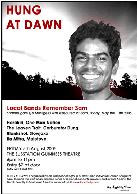
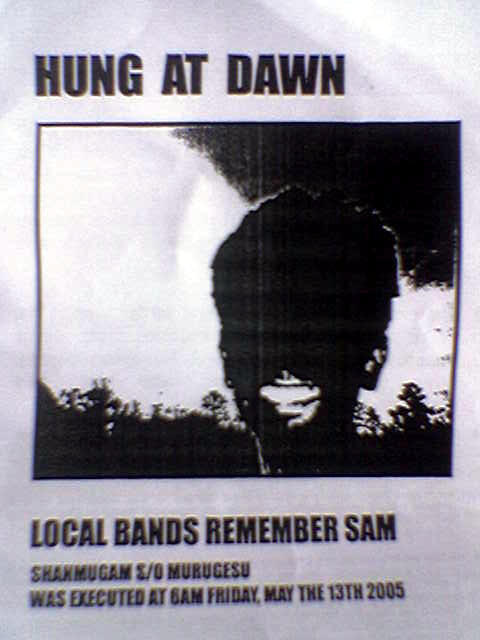
The Singapore police slapped a ban on the use of Shanmugam's face in all publicity and information material pertaining to a May 13th concert against the death penalty.


Is it not the job of journalists, writers, bloggers, podcasters, photographers, filmmakers and artists to humanise their subjects?

Those who fear human emotions most are most likely the ones who are most afraid to confront their own, and hence they legislate laws to suppress others' rights to feel and act.
______________________________________________________________________________

Some of the more sobering articles not found in Singapore's media.


His first overseas trip ends by execution in Changi gallows


From Herald Sun
Nguyen's walk to death


IT was through this gate that Tuong Van Nguyen's journey to hell began.

And as he sits on death row awaiting execution on Friday, Nguyen has no doubt reflected on the night the "beep" of the metal detector signalled the collapse of his world.
It was just on three years ago when the 22-year-old Melbourne salesman approached Gate C22 at Singapore's Changi Airport with much trepidation.

He was carrying two bags of high-grade heroin -- one strapped to his body and the other stuffed into a backpack -- and was rushing to catch the flight to Melbourne.

He was in transit from Cambodia, where he'd collected almost 400g of the white powder to smuggle into Australia for a Sydney syndicate.

Nguyen would later tell Singaporean police he had become a drug mule to pay off his twin brother's debts.

Airport security officers in Cambodia had failed to detect the two plastic packets of heroin he'd taped to his body.

Once on the Silkair flight MI622, Nguyen started to have breathing problems, so he went to the toilet and removed the packet taped to his stomach, then stuffed it in his hand luggage. He kept the other taped to his lower back.

After arriving in Singapore, Nguyen had to connect with Qantas QF 10 for his flight home.

But he fell asleep in the Business Lounge, and when he awoke realised he had only 10 minutes to make the plane.

In his police statement, Nguyen said his anxiety levels were further raised by fears that his movements were being monitored by the drug syndicate.

"At the metal detector, I placed my backpack and my business bag on to the X-ray machine," he stated.

"Then I walked through the metal detector and as I was crossing it beeped.

"At that point I knew I was going to be caught.

"A policewoman told me to stand to one side so as not to obstruct traffic.

"She then used a metal detector wand to search me by going up and down my body. The wand did not beep.

"She then touched my back and when she reached my lower back, she must have discovered the packet of heroin strapped there."

Nguyen, who has no criminal record, was immediately taken to a room where he was ordered to place his hands against the wall.

"I told him, 'No need, I will get it for you'," he stated. "I lifted up my shirt and pulled out the strapped packet on my lower back and gave it to the officer.

"He asked me what that was and I replied to him, 'It's heroin, sir'.

"I also told him that there was more and went and retrieved the pack of heroin which I had hidden inside my backpack."

At this stage, Nguyen became distressed and began to cry, at the same time hitting his head against the wall. He then sat on the floor, holding his head in his hands.

Shortly before midnight, December 12, he was taken to Singapore's Central Narcotic's Bureau and later charged on serious drug offences, with an automatic penalty of death by hanging.

It had been his first overseas trip.

Just before midnight last night all was quiet at Gate C22. About 5km away, the lights were also out at Changi Prison.

Nguyen's execution date falls on the third anniversary of the day he flew out of Australia.

From The Bulletin
Singapore deadly serious
... From mule to death row


Nearly three years on, Van has, like many others on death row, turned to religion for comfort. He has been baptised and has spent much of his time comforting other condemned prisoners. He has written letters to his closest friends in Australia, reassuring them that "everything will be all right".

Of course, it won't.

His mother is bereft, about to set off on a journey no mother should have to make. Her other boy, who has been a virtual recluse since the arrest, is also making the trip to Singapore.

Kim Nguyen has said little publicly until the past few weeks. Her English is poor and her pain unimaginable. But everyone in Australia understood when she said: "Every time I go to see Van, I tell him mummy loves him very much. He is my heart. If something happens to my son, my heart will be stopped."


______________________________________________________________________________


From
The Sunday Mail
COFFEE, TAKEAWAY FOOD AND A FASHION SHOOT TO FILL FINAL
HOURS
By CLARE MASTERS in Singapore


AS THE clock hits 6pm on Thursday, Tuong Van Nguyen will press his hands against the prison's glass window and say his last goodbyes to his mother and brother.

This is the last hour that Nguyen is allowed contact with the outside world.

His lawyers and family will then be ushered out of Singapore's Changi prison, a newly built hi-tech fortress where Nguyen will spend his last days.

It is an institution stiff with regulation and ritual but tradition dictates that the rules relax in the last week of a condemned prisoner's life.

The 25-year-old, who once had another life as a sales man, will be allocated a small
amount of money by the Singapore Government to spend on food and will be able to
order ready-made meals or takeaway, usually shared with the other inmates.

One luxury is a giant cup of coffee in a plastic mug that he will be given in the morning and will sip slowly over the day, holding on to it long after it has gone cold.

On the last day, Nguyen's regimented routine breaks when he is escorted from his tiny cell to a room where he has his photograph professionally taken as a memento for his family.

In a bizarre prison custom reserved for all death-row prisoners, the Vietnamese
refugee will slip out of the orange shorts the con demned are required to wear and the white shirt stamped with his prisoner number C856.

Newly dressed in his favourite clothes, brought to the prison by his mother, Nguyen will face the camera's flash and attempt a smile as he leans against a wall and strikes 13 different poses.

In the grief-stricken days after his broken body is returned to his family, Nguyen's mother will be given the 13 photographs as a gift from the government which killed her son.

As Nguyen treads the floor of his 3m by 2m cell, the prison of ficials will practise his execution with a sandbag of his weight. Nguyen is allowed to read censored newspapers and watch a delayed telecast of Channel Five, Singapore's English-speaking channel.

And, as night becomes Friday morning and the clock's hands reach six o'clock, Nguyen will be taken from his cell one last time to the gallows.

Then he will fall through the trapdoor and become the first Australian citizen to lose his life behind Singapore bars.

__________________________________________________________________


An excerpt of a letter written by convicted drug smuggler Nguyen Tuong Van.


In a second, more formal letter sent to the Singapore President pleading for a reprieve and signed Caleb, the name he has taken since being baptised, Nguyen claims he is beginning to learn the meaning of life.

"Recognising and understanding my offence, the ramifications and subsequent repercussions as a result of my callousness has been crucial, essentially the turning point for my remorseful transformation; an opportunity of self-discovery made possible upon my conception of God and Jesus Christ into my life," Nguyen writes.

"Amidst these score of painful revelations an unspoken truth was exposed. I found myself in deep sorrow for the true victims; the families of those whom suffer as a result of losing a loved one to drugs. This truth has put many things in perspective for me."

In another letter, written on Sunday, October 23 - after his clemency plea was rejected and he was told he had only days to live - Nguyen said he was not surprised. He was sad for his mother and twin brother Khoa and all his loved ones. But he had known this was his fate for a long time. "Sailo (a name he uses for himself in the third person) was just awaiting my day of judgement and I am glad and ready to go now. I believe by then God's purpose will have been achieved.

"Fear has yet to set in and (I) pray may God's strength in me be enough to ward off any doubts I may have."

Nguyen said he went through his normal routine in prison after being told of his looming execution and slept from 7pm to 7am.

"So 12 solid hours ... did me a world of good. This (letter) gonna be short because Sailo's got quite a number of comfort letters to write.

"God blessed me with so many beautiful beings who have loved me unconditionally so it's only befitting I write to and console each one."

Chaplain to give last rites

Father Gregoire Van Giang, a Singapore prison chaplain who assists Nguyen and other inmates, will join the former Melbourne schoolboy in prayers and walk with him from his cell to meet the hangman.

___________________________________________________


From
the Bulletin
In Cold Blood


Singapore proudly say it has "humanised" the hanging process - weighing the condemned and carefully calibrating bodyweight with a "drop" system so as to deliver a swift, clean kill when the platform gives way.

Ravi says Malaysian drug addict Vigmes Murthi wasn't so lucky. When he was hanged at Changi in September 2003, Ravi says, his head was nearly torn off by the force of the 500kg-plus drop, about seven times his bodyweight. "They got it horribly wrong," Ravi says, "his mother was screaming, screaming ... there was so much blood in the coffin, it was overflowing."

By 1pm, the family - delayed coming in from Malaysia - hadn't yet collected the corpse so Singapore summoned the state cremator to dispose of it. The family got there by 2pm and Ravi was called from chambers to have a most unseemly brawl over Vigmes' bloodied corpse with the contracted cremator, who was banking on a nice little earner. In the end, Ravi and Vigmes' family prevailed, "but with no help from the government".

By this year, Ravi says, the famous Singaporean efficiency corrected itself; too much so. On May 13, Singapore's only hangman, a corpulent 72-year-old locally born Indian called Darshan Singh, roused another Ravi client, Shanmugam Murugesu, convicted in 2003 of trafficking 1kg of cannabis, at 2am on the morning of his execution.

In a procedure that awaits Nguyen, he was served a light breakfast before being led to the gallows chamber where he waited and waited - "and one can only imagine his torment", says Ravi - until dawn to die.

Two days earlier, Ravi says, after asking Shanmugam's mother to send in her boy's best clothes, the state had taken him from his cell and photographed him in 14 different poses, including one seated behind a desk. "He looked as if he was the general manager of a big company," says Ravi.

The photo set was presented to Shanmugam's mother by the state after it had killed him, Ravi says, suggesting she might wish to hang the picture of him in his suit in the family living room "as a memento of the potential of her boy". In Singapore, it seems, death comes with interior design advice.

__________________________________________________________

From TVNZ
Nguyen counts down final days


Lex Lasry, Nguyen's counsel, told reporters the former salesman was "calm", composed" and "rational" after seeing him for two-and-a-half hours last week.

Nguyen was "obviously preparing himself for the end of his life, which I must say takes my breath away," Lasry said.

Subhas agrees that those staring death in the face after years on death row can show immense fortitude.

"Most of them have accepted their fate. You'll find that most of them have developed religious (feelings)," he says.

"I've gone to see many of my clients who are going to hang the next day or the day after. They are very philosophical about it.

"Of course you feel that this guy is going to die in two days, but you get used to it I suppose," Subhas said.

It's a long-standing tradition that executions take place at 6am on Fridays.

The gallows are positioned just a short walk from Nguyen's small cell on death row.

He will be handcuffed as he is led to his death.

________________________________________________________________


Mother of Nguyen Tuong Van arriving with twin brother Khoa in Changi Airport

From The Sunday Mail
I'm ready to meet angels: Nguyen


After Nguyen was sentenced to death in March 2004, he told how he desperately missed his brother and mother.

"The pain of missing her is by far sharper than anything physical I have ever felt," he wrote.

"With aching comprehension, I come to terms with the loss I feel without mum."

Nguyen, who is popular among other inmates, told of how he planned to keep the news of his looming execution from his friends inside, to spare them from anguish.

"I was gonna keep it from the guys in here so as to spare them, but I made second page of the newspaper so there went my surprise," he wrote.

God and faith are common themes in his writing.

In a letter to a friend, written before his clemency was rejected, he writes: "The
hidden providence of God – your undying support has gone a long way in keeping my pilot light burning; esp. during my darkest moments."
_________________________________________________________________


Preparations for death

Every religious tradition emphasizes that to prepare spiritually for death it is vital that we establish right now a daily spiritual practice, a practice so deeply ingrained that it becomes part of our flesh and bones, our reflexive response to every situation in life, including our experiences of suffering.

Making a connection, healing relationships and letting go. This task refers to our relationships with others, particularly family and friends. The main points here are to learn to communicate honestly, compassionately and unselfishly, and to resolve any unresolved problems we may have with others.

Nguyen's families and friends should be saying their goodbyes in the next two days. All news of attempts to seek a stay of his execution should not reach him. It is best for Nguyen that he mentally steadies himself to depart, in the words of sacked hangman Darshan Singh, "to a world better than this."

It will be difficult - as hanging will not be painless and instantaneous. Nguyen will feel tremendous pain. Let's pray that when the trapdoor opens and the noose tightens, he finds the composure to not struggle, and just let go.


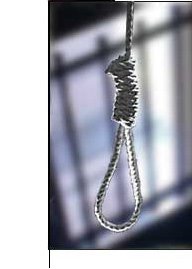
Hanging
For execution by this method, the inmate may be weighed the day before the execution, and a rehearsal is done using a sandbag of the same weight as the prisoner. This is to determine the length of 'drop' necessary to ensure a quick death. If the rope is too long, the inmate could be decapitated, and if it is too short, the strangulation could take as long as 45 minutes. The rope, which should be 3/4-inch to 1 1/4-inch in diameter, must be boiled and stretched to eliminate spring or coiling. The knot should be lubricated with wax or soap "to ensure a smooth sliding action," according to the 1969 U.S. Army manual. (The Corrections Professional, 1996 and Hillman, 1992)


Immediately before the execution, the prisoner's hands and legs are secured, he or she is blindfolded, and the noose is placed around the neck, with the knot behind the left ear. The execution takes place when a trap-door is opened and the prisoner falls through. The prisoner's weight should cause a rapid fracture-dislocation of the neck. However, instantaneous death rarely occurs. (Weisberg, 1991)

If the inmate has strong neck muscles, is very light, if the 'drop' is too short, or the noose has been wrongly positioned, the fracture-dislocation is not rapid and death results from slow asphyxiation. If this occurs the face becomes engorged, the tongue protrudes, the eyes pop, the body defecates, and violent movements of the limbs occur. (The Corrections Professional, 1996 and Weisberg, 1991)


Monday, November 14, 2005

Govt sponsors multi-million dollar documentary on Singapore's history

No, we do not allow foreigners to "meddle" in our affairs, especially not with their Western liberal bias. Instead, let's entrust them to produce a three-hour documentary of our nation's history - with our money.


"You are not going to tell us how to run our country"
- MM Lee Kuan Yew warning foreign journalists not to meddle in Singapore

"Since we want the story to be told in an independent and impartial manner, and told in a way that would be of interest to viewers outside Singapore, I thought it would be better that it is done by a non-Singaporean company."
- Tommy Koh, chairman of National Heritage Board, on his preference for foreigners to produce a film on Singapore's history, Straits Times, Nov 12 2005

The Singapore Government routinely tells foreigners not to "meddle" in our affairs but when it comes to producing a three-hour film on our history, it prefers to engage foreigners. Apparently, according to Tommy Koh, local producers cannot be entrusted to tell the story of Singapore in an independent and impartial manner. A foreign company can do the job better. You go figure.


Discovery Channel is set to roll out a three hour documentary next month entitled "History of Singapore'. Preview audiences interviewed by the Straits Times indicated that they are confident that the film will present a "fair and balanced" account. ST also reported that political dissidents such as JB Jeyaratnam, former unionist Fong Swee Suan and the late Lim Chin Siong are featured in the film.

However, the paper failed to mention that the documentary is sponsored by Singapore Airlines and Neptune Orient Lines, and supported by the National Heritage Board. This means that it is considered a Government-sponsored film and is thereby exempted from being deemed a 'party political film' - of which I am still under police investigation for the making of 'Singapore Rebel.'

Legally, "History of Singapore' can be as biased and partisan as the producers (and financers) would like it to be without violating the law. Clever.

The idea for the documentary was mooted by then Prime Minister Goh Chok Tong in 2003 and is produced by British-based Lion Television which reportedly had "free rein" in the production.

Saturday November 12, 10:17 PM

Multi-million-dollar documentary
on history of Singapore to air next month


SINGAPORE : "The
History of Singapore" - as the landmark multi-million-dollar documentary is
called - will air on Discovery Channel next month.

Footages never seen before and interviews with key figures like Minister Mentor Lee Kuan Yew - all filmed on high-definition - is featured in the three-hour special.

The documentary will be telecast on Channel NewsAsia and other MediaCorp channels
soon.

The Japanese surrendered to the British at the end of World War Two in a room in City Hall.

And in 1965, Singapore's first Prime Minister Lee Kuan Yew was also sworn in there at the City Hall chamber.

So it was a fitting venue to launch the new documentary series.

From Singapore's beginnings as a mangrove swamp to the Asian economic metropolis it is today, the history of Singapore over the past two centuries is showcased to viewers in a three-hour special.

Besides rare historical footage such as the first known map of Singapore after Raffles landed, the documentary also has real-life re-enactments.

There will also be interviews with key historical figures recounting turning points in Singapore's past.

So how different is this version of history compared to previous ones?

Professor Tommy Koh, chairman of the National Heritage Board said:

"This is not a Singapore documentary, it is a documentary about Singapore but made by an international company. We hope the final product will be fair and balanced, and tells our story in an engaging and convincing way."

"It does capture quite well, in three hours, the long and complex history of Singapore. Of course if you do a documentary and you want to make compelling TV, you have to take certain creative decisions but I have to say the story is quite accurate," said Professor Tan Tai Yong, a historian at the National University of Singapore.

Discovery's team also faced challenges when they were filming the series.

Said James Gibbons of Discovery Asia: "How do you take 200 years and condense it? An objective was to tell the story of Singapore - which is one of the four Asian tigers. The story we believe is emblematic of many of the transformations that have taken place in Asia over 100 years. It's a fascinating story for our audience in the region and perhaps beyond."

As a special tribute to mark Singapore's 40th birthday, the three-part series will reach more than 100 million households in 23 countries, telling the history of Singapore to the local and international audience.

The documentary is sponsored by Singapore Airlines and Neptune Orient Lines, and supported by the National Heritage Board.

- CNA /ls


_______________________________________________________________

While Singapore has laws to fine and imprison their film-makers for making 'political' films, North Korea adopts a more hard-nosed approach in reining in renegade film-makers...

They execute film-makers in this country

"Do you really believe that we are equal to North Korea ? Oh, come on. We are not that daft. We know what is in our interest and we intend to preserve our interests and what we have is working. You are not going to tell us how to run our country"
- MM Lee Kuan Yew speaking to foreign journalists on Singapore's low ranking press freedom


"We consider that the United Nations has no right to discuss the Korean question nor has it any right to meddle in the domestic affairs of our country. The Korean question should not be discussed by foreigners in New York of Washington, it should be discussed in Pyongyang or Seoul by the Koreans themselves."
- Kim Il Sung, father of current North Korea President Kim Jong Il


Here's another documentary you should catch. Click here for CNN schedules.

Undercover in the Secret State

In Undercover in the Secret State, Dispatches exposes the true face of North Korea its strict regime has strived to keep hidden. Although rumours abound of forced labour camps and systematic human rights abuses, Asia's last Stalinist state and one of the world's emerging nuclear powers, remains something of an enigma.

In this film, award-winning filmmaker Kim Jung Eun (Shadows and Whispers: The Struggle of North Korean Refugees) lays bare the cruel realities of daily life, presenting powerful undercover footage and interviews with defectors fleeing the regime.

Working as secret cameramen, the dissidents Jung Eun meets film public executions and concentration camps to expose the subjugated existence of a nation gripped by the cult of its reclusive leader, Kim Jong Il. The chilling footage smuggled to the outside world, hand by hand, along an underground network, makes difficult viewing.

Prisoners whose only crime was to help people escape the country are submitted to the firing squad under the gaze of men, women and school children. Elsewhere detainees in a political prison camp are incarcerated with three generations of their family for criticising the regime.

In a bid to bring down the one-party dictatorship from within, the fledgling dissident movement produces publicity which criticises the dictatorship - a crime punishable by death.

They also import illicit American and South Korean soap operas which are proving an effective means of promoting unease. The soaps depict a comfortable standard of life in South Korea which contradict the state-controlled media reports and sit in stark contrast to the hand to mouth existence north of the border.

Undercover in the Secret State is a powerful film which presents an uncensored version of North Korea, a country blighted by acute food shortages and a rigid regime which violates human rights. But it also offers hope of a change powered by new technology.

Below is excerpt of article by Felix Soh published in the Straits Times Nov 3, 2005

Shocking images of life in North Korea

Secretly filmed tapes show public executions, poverty and anti-govt graffiti

North Korean dissidents are using mobile phones, digital cameras and video recording devices to leak chilling, never-before-seen images of life inside the reclusive country, including public executions by firing squads.

A network of secret cameramen is employing technology as the latest weapon to expose the truth about harsh living conditions in North Korea and to fuel growing dissent against the repressive Stalinist regime of strongman Kim Jong Il.

If they are caught filming, they face prison or death.

Among the most shocking footage ever to have come out of North Korea are these:

- Instant trials followed by public executions, with children among those witnessing the atrocities. (My note : public executions is an "atrocity"; executions done behind closed doors in Changi Prison is not?)

- Rare defacing of posters of Kim Jong Il with anti-government graffiti such as "Bring down Kim Jong Il, he has killed everyone who stood for democracy".

In one of the executions shown in the documentary, people are ordered to gather in a dusty field.

A public official tells the crowd that those who go against their country will be executed. Minutes later, a man is led out and tied to a pole. He is blindfolded. Three policemen step forward and raise their rifles.

The official shouts: "Forward. Right. Shoot, shoot, shoot."

The shots ring out. The man slumps against the ropes that bind him to the pole.

His crime: trying to make contact with the outside world.

North Korea is a hermit-like state whose people's lives, activities and movements are tightly controlled and restricted.

The Pyongyang regime describes the country as paradise, but regugees and dissidents speak of repression, famine, starvation, prison and torture. Images of the latter are now being smuggled out of the country.

CNN's Undercover In The Secret State will be telecast in Singapore,
Malaysia, the Philippines, Hong Kong and Taiwan at 7pm on Thursday, with replays on subesequent days.